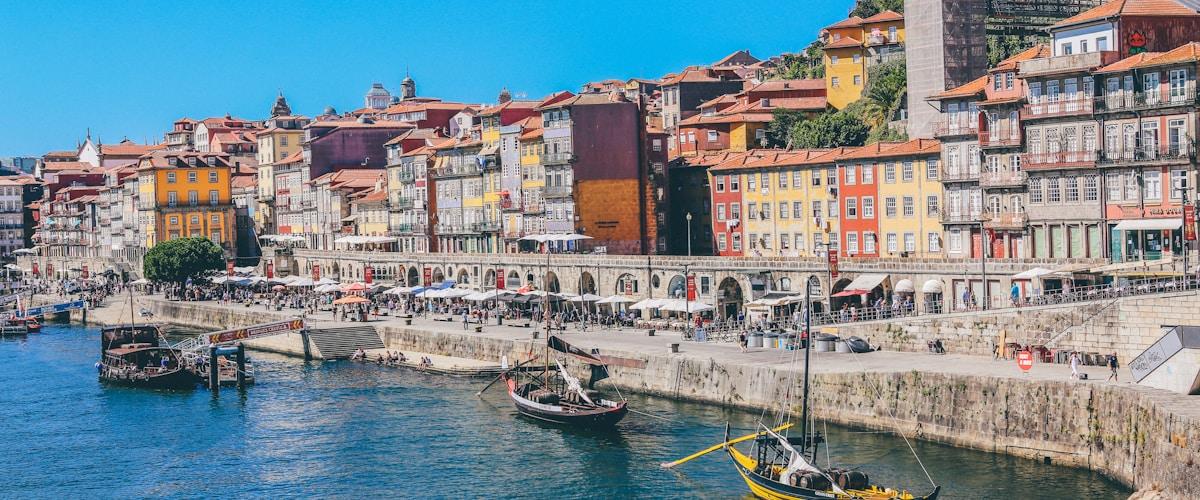
Over 4,200 Nigerian nationals received Portuguese residence permits in 2025, a 38% increase from 2023, making Nigeria the fastest-growing source of African applicants for Portugal's digital nomad and D8 visa programmes. With Portugal sitting in the GMT+0/+1 timezone — perfectly aligned for remote workers serving both African and European clients — and a growing Nigerian diaspora already established in Lisbon and Porto, the country has become the most practical EU entry point for Nigerian tech professionals, freelancers, and remote workers.
Portugal offers two main visa routes for Nigerian remote workers: the traditional D8 passive income visa and the dedicated digital nomad visa introduced in October 2022 under Decree-Law 23/2022. Both provide a path to permanent residency and, eventually, EU citizenship. But the requirements, income thresholds, and application processes differ in important ways that can determine whether your application succeeds or fails.
This guide covers everything a Nigerian applicant needs to know: which visa to choose, how to apply through VFS Global in Lagos or Abuja, exactly what income you need to prove, how much the entire process costs in Naira, and what life in Portugal actually looks like once you arrive. We have built it specifically around the questions Nigerian applicants ask most, based on consular data and community feedback from Nigerians who have completed the process.
Why Portugal Is the Top EU Choice for Nigerian Remote Workers
Portugal's appeal to Nigerian remote workers goes beyond its beaches and affordable lifestyle. There are structural advantages that make it particularly well-suited for Nigerian professionals, compared to alternatives like Germany, Spain, or the Netherlands.
Timezone alignment. Portugal operates on GMT+0 in winter and GMT+1 in summer. For Nigerian remote workers (GMT+1 year-round), this means zero to one hour of difference. If your clients are in Lagos, London, or anywhere in West/Central Africa, you are working the same business hours. If your clients are in the US, you can comfortably cover East Coast hours (5-6 hours behind) with a late start to your day. This is a genuine competitive advantage over destinations like Thailand or Mexico.
Growing Nigerian community. Portugal's Nigerian diaspora has grown substantially since 2020. Lagos-born tech founders, fintech professionals, and creative freelancers have established visible communities in Lisbon's Arroios and Martim Moniz neighbourhoods. Nigerian restaurants, churches, and professional networking groups exist in both Lisbon and Porto. You will not be starting from zero.
Safety and stability. Portugal consistently ranks among the top 5 safest countries in the world on the Global Peace Index (6th in 2025). Violent crime is exceptionally rare. For Nigerian professionals concerned about personal safety, this is a significant quality-of-life upgrade.
Affordable EU entry point. Compared to other Western European countries with digital nomad visas, Portugal offers lower costs of living, reasonable visa fees, and a relatively straightforward application process. Monthly living costs in Lisbon start at EUR 1,200-1,500 for a single person — substantially less than Amsterdam, Berlin, or Dublin.
English widely spoken. Portugal has one of the highest English proficiency rates in continental Europe. In Lisbon and Porto, you can handle most daily interactions in English, from government offices to restaurants. Learning Portuguese is beneficial for integration, but it is not a survival requirement in the first year.
D8 Visa vs Digital Nomad Visa: Which Is Right for You?
Portugal has two overlapping visa categories that Nigerian remote workers can use. Understanding the differences is critical because applying for the wrong one can result in a rejection or unnecessary complications.
| Feature | D8 Passive Income Visa | Digital Nomad Visa |
|---|---|---|
| Income Threshold | €911.50/mo (1x minimum wage) | €3,646/mo (4x minimum wage) |
| Income Source | Passive income, pensions, remote work, investments | Remote employment or freelance contracts (non-Portuguese companies) |
| Initial Duration | 4 months (visa) → 2-year residence permit | 1 year (visa) → renewable |
| Renewal | 2-year periods (renewable indefinitely) | 1-year periods (up to 5 years total) |
| Work Restriction | Remote work for non-Portuguese employers permitted | Remote work for non-Portuguese employers only |
| Tax Regime | NHR eligible (20% flat rate or exemptions) | NHR eligible (20% flat rate or exemptions) |
| Path to PR | 5 years of continuous residence | 5 years of continuous residence |
| Visa Fee | €90 | €75 |
| Best For | Lower-income remote workers, retirees, passive income earners | Higher-earning remote employees and freelancers |
If you earn under EUR 3,646/month: Apply for the D8 visa. The income threshold is only EUR 911.50/month (the Portuguese minimum wage), making it accessible to a much wider range of remote workers. The D8 is also broader in scope, accepting passive income, pension income, and investment returns alongside remote employment income.
If you earn over EUR 3,646/month: The digital nomad visa is designed for you. It offers a more streamlined process and is explicitly tailored for remote workers. The higher income threshold actually works in your favour during processing, as it signals financial stability to the consular officer.
Both visas lead to the same destination: a Portuguese residence permit, access to the NHR tax regime, and a path to permanent residency after 5 years. The choice comes down to your income level and the source of that income.
Check your visa eligibility for free
Get Your Free Verdict →Stop guessing. Get your verdict.
See which countries match your income, skills, and goals. Free. 3 minutes.
Get Your Free Verdict →Income Requirements: What Nigerian Applicants Need to Prove
The income requirement is the single most important element of your application. Get this wrong and your visa will be refused, regardless of how perfect everything else is.
Digital Nomad Visa: EUR 3,646/Month
The digital nomad visa requires proof of monthly income equal to four times the Portuguese minimum wage. In 2026, with the minimum wage at EUR 911.50, the threshold is EUR 3,646 per month (approximately EUR 43,752 per year). At the March 2026 CBN exchange rate, this equates to approximately NGN 5.8 million per month or NGN 69.6 million per year.
Acceptable proof includes employment contracts showing your monthly salary, 6 months of payslips, bank statements showing regular deposits, tax returns from Nigeria (filed with FIRS), and client invoices or freelance platform earnings summaries (Upwork, Toptal, Fiverr, etc.). If you are paid in USD, provide the USD bank statements directly — the consulate will convert at the prevailing rate.
D8 Visa: EUR 911.50/Month
The D8 visa has a lower bar: EUR 911.50/month (approximately NGN 1.45 million at March 2026 rates). However, consular officers often expect applicants to demonstrate income well above the minimum, particularly when applying from countries with complex currency situations. Showing EUR 1,500-2,000/month in consistent income will strengthen your application substantially.
Use a domiciliary account: If you receive payments in USD, GBP, or EUR, maintain a Nigerian domiciliary account and provide those statements. They are clearer for consular review than Naira-denominated accounts with volatile exchange rate conversions.
Include contracts alongside bank statements: A contract or letter from your employer confirming your role, salary, and remote work arrangement adds credibility to your bank statements.
Show consistency: Six months of regular, similar-sized deposits is far stronger than a large lump sum. The consulate wants to see ongoing income, not savings.
Freelancers: Provide a portfolio of active client contracts, platform earnings summaries, and invoices. If your income varies month to month, calculate and present the average over 6-12 months.
Step-by-Step Application Process from Nigeria
Portuguese visa applications from Nigeria are processed through VFS Global, which operates visa application centres in Lagos and Abuja. Here is the complete process, broken into actionable steps.
Step 1: Gather Your Documents (3-6 Weeks)
You will need the following documents, all of which must be originals or certified copies:
Standard documents: valid Nigerian passport (minimum 6 months validity beyond intended stay, with at least 2 blank pages), two recent passport photographs (white background, 3.5 x 4.5 cm), completed visa application form (available on the VFS Global Portugal website), and proof of accommodation in Portugal (rental contract, hotel booking, or invitation letter from a host).
Financial documents: 6 months of bank statements showing income above the threshold, employment contract or freelance client contracts, most recent tax clearance certificate from FIRS, and proof of health insurance valid in Portugal (minimum EUR 30,000 coverage).
Criminal record: Police clearance certificate from the Nigeria Police Force Criminal Investigation Department. This must be less than 3 months old at the time of application.
For the digital nomad visa specifically: evidence that your employer is registered outside Portugal, a declaration that you will work remotely, and proof that the employment relationship has existed for at least 3 months.
Step 2: Apostille and Translate (2-3 Weeks)
Since Nigeria joined the Hague Apostille Convention in 2023, you can apostille documents through the Federal High Court or state High Courts. Documents requiring apostille include your police clearance certificate, educational certificates, birth certificate, and marriage certificate (if applicable). Each apostille costs approximately NGN 15,000-25,000.
All documents must be translated into Portuguese by a certified translator. You can use certified translators in Lagos (several operate near Victoria Island and Ikoyi) or commission translations online through Portuguese-certified translators. Budget NGN 20,000-40,000 per document for certified translation. Some applicants save money by translating multiple documents as a package.
Step 3: Book VFS Global Appointment (2-4 Weeks Wait)
Book your appointment online through the VFS Global Portugal website. Lagos appointments are typically available sooner than Abuja due to higher processing volume. The VFS Global service fee is approximately EUR 40 (around NGN 64,000) on top of the visa application fee. Appointments are available Monday to Friday, 8:00 AM to 3:00 PM.
Arrive at your appointment with all original documents plus two photocopies of each. VFS Global staff will review your documents for completeness before accepting your application. If anything is missing, you will be turned away and will need to rebook.
Step 4: Attend Biometrics and Submit (1 Day)
At your VFS Global appointment, you will submit your documents, provide biometric data (fingerprints and photograph), and pay the visa application fee. The visa fee is EUR 90 for the D8 visa or EUR 75 for the digital nomad visa (approximately NGN 120,000-144,000). You can pay in Naira at the prevailing exchange rate.
Step 5: Wait for Processing (30-60 Business Days)
Your application is forwarded to the Portuguese consulate for processing. Standard processing takes 30-60 business days, though some Nigerian applicants report wait times of up to 90 days during peak periods. You can track your application status through the VFS Global tracking portal using your receipt number. The consulate may request additional documents or an interview during this period.
Step 6: Collect Visa and Travel (1-2 Weeks)
Once approved, you collect your passport with the visa from VFS Global (or have it couriered for an additional fee). Your visa is valid for 4 months, during which you must enter Portugal. Upon arrival, you have 4 months to apply for your residence permit (Autorização de Residência) at AIMA (the Agency for Integration, Migration and Asylum, which replaced SEF in 2023).
Not sure if Portugal is the right country for you?
Our free verdict matches your profile against 1,900+ immigration programmes across 200+ countries & territories — including Portugal's D8 and digital nomad visas. Takes 2 minutes.
Free VerdictCost of Living: Portugal vs Nigeria
Understanding real costs is essential for budgeting your move. Here is how monthly expenses in Portugal's main cities compare to Lagos and Abuja.
| Expense | Lisbon | Porto | Braga | Lagos (Nigeria) | Abuja |
|---|---|---|---|---|---|
| Rent (1-bed, centre) | €950-1,300 | €700-1,000 | €500-700 | €400-800* | €300-600* |
| Groceries | €250-350 | €220-300 | €200-280 | €150-300* | €120-250* |
| Transport | €40 (monthly pass) | €40 (monthly pass) | €35 (monthly pass) | €80-150* (mixed) | €60-120* (mixed) |
| Utilities | €150-150 | €90-130 | €80-120 | €50-120* | €40-100* |
| Health Insurance | €40-100 | €40-100 | €35-80 | €25-80* | €20-60* |
| Dining Out (per meal) | €10-15 | €8-12 | €7-10 | €3-10* | €2-8* |
| Total Monthly (est.) | €1,500-2,200 | €1,200-1,800 | €950-1,400 | €750-1,500* | €600-1,200* |
*Nigerian costs converted at March 2026 CBN rate (EUR 1 = NGN 1,590). Actual costs vary significantly by neighbourhood and lifestyle. Lagos Island/Ikoyi costs can exceed Lisbon equivalents.
Lisbon is the most expensive Portuguese city but still 30-40% cheaper than London, Paris, or Amsterdam. A single remote worker can live comfortably on EUR 1,800-2,200/month including rent. The city has the best public transport, largest expat community, and most coworking spaces.
Porto offers a meaningful cost saving over Lisbon (roughly 15-20% lower) with comparable quality of life. The city has a thriving tech scene, excellent food culture, and is increasingly popular with digital nomads. It is also smaller and easier to navigate.
Braga is Portugal's best-kept secret for budget-conscious remote workers. Rent is 40-50% lower than Lisbon, the city has fast internet, a university atmosphere, and direct train connections to Porto (45 minutes). Monthly costs of EUR 1,000-1,400 are realistic.
NIF, Bank Account, and the NHR Tax Regime
Once you arrive in Portugal, three administrative tasks are critical: getting your NIF, opening a bank account, and registering for the NHR tax regime.
NIF (Número de Identificação Fiscal)
The NIF is Portugal's tax identification number, equivalent to Nigeria's TIN. You need it for everything: renting an apartment, opening a bank account, signing a phone contract, and filing taxes. You can obtain a NIF before arriving in Portugal through a fiscal representative (a Portuguese citizen or legal entity who agrees to act as your tax representative), or in person at a Finanças (tax office) after arrival.
Many Nigerian applicants obtain their NIF remotely through online services like Bordr, e-Residence, or NIF.pt, which charge EUR 150-300 for the service. In person at a Finanças office, the NIF is free, but you will need a fiscal representative if you do not yet have a Portuguese address. Once you have a residence permit, the fiscal representative requirement is dropped.
Opening a Portuguese Bank Account
Portuguese banks require your passport, NIF, proof of address (your rental contract or a utility bill), and proof of income. Major banks include Millennium BCP, Caixa Geral de Depósitos (state-owned), Novo Banco, and Santander Portugal. Digital banks like ActivoBank (part of Millennium BCP) offer free accounts with no maintenance fees and English-language interfaces.
Be prepared for the conversation about source of funds. Portuguese banks, like all EU banks, follow strict anti-money-laundering rules. Bring your employment contract, recent payslips, and a letter from your employer. If you are a freelancer, bring client contracts and invoices. The process typically takes 1-2 weeks from application to active account.
NHR Tax Regime (Non-Habitual Resident)
Portugal's NHR regime is one of the most attractive tax incentives in Europe for new residents. If you have not been a Portuguese tax resident in the previous 5 years, you can apply for NHR status, which provides significant tax benefits for 10 years. Under NHR, qualifying foreign-sourced income (including remote work income from a non-Portuguese employer) may be taxed at a flat 20% rate instead of Portugal's standard progressive rates of 14.5-48%. Some categories of foreign income may be fully exempt from Portuguese tax if taxed in the source country.
To apply, register as a tax resident in Portugal (automatic when you obtain your NIF and residence permit), then submit the NHR application through the Finanças Portal by March 31 of the year following your arrival. The application is free. Consult a Portuguese tax adviser to understand how NHR interacts with your specific income sources and Nigeria's tax treaties (Nigeria and Portugal do not currently have a double taxation agreement, which affects how NHR exemptions apply).
Since Nigeria and Portugal do not have a double taxation agreement, income earned remotely for a Nigerian employer while living in Portugal may be subject to tax in both countries. Under NHR, you may still benefit from the 20% flat rate on "high value-added" activities (which includes most tech and professional roles), but you should consult a cross-border tax specialist before making the move. Budget EUR 300-500 for an initial tax consultation.
If your employer is based in the UK, US, or another country that has a tax treaty with Portugal, the situation is simpler and NHR benefits are more straightforward to claim.
Nigerian Community in Portugal and Cultural Adjustment
Moving from Lagos or Abuja to Lisbon involves genuine cultural adjustment, but the transition is smoother than many Nigerian professionals expect.
The Nigerian community. Portugal's Nigerian population is concentrated in the Lisbon metropolitan area, particularly in Arroios, Amadora, and Sintra. Nigerian churches (both Catholic and Pentecostal) hold regular services in English and Yoruba/Igbo. Nigerian grocery stores stock staples like garri, palm oil, crayfish, and plantains — though at higher prices than in Lagos. Facebook groups like "Nigerians in Portugal" and "Nigerian Digital Nomads Europe" are active sources of practical advice and social connection.
Food. Portuguese cuisine is surprisingly compatible with Nigerian tastes: both cultures centre meals around rice, grilled fish, chicken, and stews. Portuguese supermarkets (Continente, Pingo Doce, Lidl) stock most of the ingredients you need for Nigerian cooking. African/Asian supermarkets in Lisbon and Porto carry speciality items. Eating out is affordable: a typical Portuguese lunch (prato do dia) costs EUR 8-12 and portions are generous.
Pace of life. Portugal moves more slowly than Lagos. Government offices, banks, and service providers operate at a pace that can feel frustrating if you are used to the hustle of Nigerian business culture. Appointments often run late, and bureaucratic processes that should take days can take weeks. Build buffer time into every administrative task. On the positive side, the slower pace translates into a genuine improvement in work-life balance.
Language. While English is widely spoken in Lisbon and Porto, learning Portuguese accelerates integration and is required for permanent residency (A2 level). Nigerian professionals often find Portuguese easier to learn than expected, partly because the grammar structure shares some logical patterns with Yoruba and Igbo. Free Portuguese courses are available through AIMA's integration programmes for new residents.
Weather. Portugal's climate is Mediterranean: warm, dry summers (June-September) and mild, rainy winters (November-February). Lisbon averages 260 sunny days per year. For anyone coming from Lagos, the winter temperatures (8-15°C) will feel cold, so budget for proper winter clothing. Summer temperatures (25-35°C) are comparable to a mild Lagos dry season.
Healthcare and Insurance Requirements
Private health insurance is mandatory for your visa application and initial residence permit. Your policy must provide minimum coverage of EUR 30,000, include medical repatriation, and be valid throughout Portugal (not just specific cities).
For the visa application: International insurers accepted by the Portuguese consulate include SafetyWing, Allianz Care, Cigna Global, and World Nomads. Portuguese insurers like Multicare (Fidelidade group) and Médis also offer policies specifically designed for visa applicants. Expect to pay EUR 40-120/month depending on age and coverage level.
After obtaining your residence permit: Once you are a legal resident and contribute to Portuguese social security (Segurança Social), you gain access to the SNS (Serviço Nacional de Saúde), Portugal's public healthcare system. Public healthcare is free or low-cost for residents, covering GP visits, hospital treatment, emergency care, and subsidised prescriptions. Wait times for specialists can be long (2-6 months), so many expats maintain private insurance alongside SNS access.
Portugal's healthcare system ranks well above Nigeria's in terms of infrastructure, availability of specialists, and emergency response. Hospital care in Lisbon and Porto is comparable to Western European standards. Pharmacies are well-stocked, and many medications available only by prescription in Nigeria can be obtained over the counter in Portugal.
Path from Digital Nomad Visa to Permanent Residency
The digital nomad visa is not a dead end — it is the first step on a clear path to permanent EU residency and, eventually, Portuguese citizenship.
Years 1-2: Your initial visa and residence permit. Renew your residence permit annually (or every 2 years for D8 holders). Maintain your income above the required threshold, keep your health insurance active, and ensure you spend the majority of your time in Portugal (no absences longer than 6 consecutive months).
Year 5: Apply for permanent residency (Autorização de Residência Permanente). Requirements: 5 years of continuous legal residence, no absences exceeding 6 consecutive months or 8 months total during the 5-year period, proof of sufficient income, basic Portuguese language skills (A2 level CIPLE exam), and a clean criminal record.
Year 5+ (Citizenship): Under Portugal's current nationality law, you can apply for Portuguese citizenship after 5 years of legal residence (reduced from the previous 6-year requirement). You must pass the A2 Portuguese language test and demonstrate ties to the Portuguese community. Portuguese citizenship grants you an EU passport, allowing visa-free travel to 188 countries and the right to live and work anywhere in the EU/EEA.
For Nigerian nationals specifically, this path is transformative. A Portuguese passport eliminates the visa requirements that currently restrict Nigerian passport holders for travel to Europe, North America, Japan, Australia, and most other developed nations. The Nigerian passport currently allows visa-free access to approximately 46 countries; a Portuguese passport opens 188.
Month 0-5: Document preparation, visa application, approval, and travel to Portugal.
Year 1-5: Live and work in Portugal on residence permit. Learn Portuguese. Build community ties.
Year 5: Apply for permanent residency. Pass A2 Portuguese exam.
Year 5-6: Apply for Portuguese citizenship and EU passport.
Frequently Asked Questions
Can Nigerians get a digital nomad visa for Portugal?
Yes. Nigerian citizens are eligible for both Portugal's D8 passive income visa and the dedicated digital nomad visa introduced in late 2022. You apply through VFS Global in Lagos or Abuja. The key requirements are proof of regular remote income of at least EUR 3,646 per month (four times the Portuguese minimum wage), a clean criminal record, private health insurance, and a valid employment or freelance contract. Processing takes 30-60 business days from submission.
What is the income requirement for Portugal's digital nomad visa in 2026?
The minimum income requirement is four times the Portuguese national minimum wage. In 2026, the minimum wage is EUR 911.50 per month, so the threshold is EUR 3,646 per month or approximately EUR 43,752 per year. You must prove this through employment contracts, payslips, bank statements, or client invoices covering the previous 3-6 months. Income must be from sources outside Portugal.
What is the difference between Portugal's D8 visa and the digital nomad visa?
The D8 visa is Portugal's traditional passive/remote income visa for retirees and remote workers, requiring proof of income at EUR 911.50/month minimum (the Portuguese minimum wage). The digital nomad visa, introduced in October 2022, specifically targets remote workers and freelancers with a higher income threshold of EUR 3,646/month but offers a streamlined process. Both lead to a residence permit. The digital nomad visa explicitly permits remote work for non-Portuguese companies, while the D8 is broader and includes passive income sources like pensions and investments.
How do I prove my income in Naira for the Portugal visa application?
Your bank statements should be in the original currency (Naira) with an official English translation. The consulate converts at the prevailing exchange rate. As of March 2026, EUR 3,646 equals approximately NGN 5.8 million at the official CBN rate. Provide 6 months of bank statements showing consistent deposits, employment contracts or freelance invoices, and tax returns (if applicable). Statements must be stamped by your bank. If paid in USD, provide the USD statements directly as the conversion is more straightforward.
Can I bring my family on a Portugal digital nomad visa?
Yes. Portugal allows family reunification for digital nomad visa holders. Your spouse and dependent children can apply for dependent residence permits once your own permit is approved. You need to demonstrate additional income of 50% of the minimum wage (approximately EUR 456) per additional adult and 30% (approximately EUR 273) per child. Family members receive residence permits valid for the same duration as yours and gain access to public healthcare and education. Apply for family reunification within 6 months of obtaining your residence permit.
How long does the Portugal visa application take from Nigeria?
From start to finish, expect 3-5 months. Document gathering and apostille takes 3-6 weeks, the VFS Global appointment booking typically has a 2-4 week wait, and consular processing takes 30-60 business days after submission. VFS Global Lagos tends to be faster than Abuja due to higher processing volume. Once approved, you receive your visa within 5-10 business days and must enter Portugal within 4 months. Plan for potential delays during peak periods (January-March and September-October).
Do I need to apostille my Nigerian documents for Portugal?
Yes. Nigeria is a member of the Hague Apostille Convention (since 2023), so your documents can be apostilled through the Nigerian High Courts or Federal High Court. Documents that need apostille include your police clearance certificate, degree certificates, birth certificates, and marriage certificate (if applicable). Each apostille costs approximately NGN 15,000-25,000. Documents must also be translated into Portuguese by a certified translator. Budget NGN 50,000-100,000 total for apostille and translations.
Can I get permanent residency in Portugal through the digital nomad visa?
Yes. After 5 years of continuous legal residence in Portugal on any valid residence permit (including the digital nomad visa), you can apply for permanent residency. You must not have been absent from Portugal for more than 6 consecutive months or 8 months total during the 5-year period. You also need to pass a basic Portuguese language test (A2 level). After 5 years of legal residence, you can apply for Portuguese citizenship, which grants you an EU passport and freedom of movement across all 27 EU member states.
Useful tools for your move
Wise — Transfer money from Nigeria to Portugal at the real exchange rate (up to 8x cheaper than Nigerian banks).
SafetyWing — Health insurance accepted for Portugal visa applications, starting at $45/month.
NordVPN — Access your Nigerian banking apps and services securely from Portugal.
Preply — Learn Portuguese with 1-on-1 tutoring from native speakers before you arrive.
Remitly — Send money home to Nigeria quickly with low fees and competitive exchange rates.
Airalo — Get a Portuguese eSIM before you land — data in 200+ countries, no roaming charges.
Ready to find out where you can actually move?
Our engine checks your profile against 1,900+ visa programmes in 200 countries. MOVE, DELAY, or AVOID — in 3 minutes.
Get Your Free Verdict →Related guides
- Best Countries to Move to from Nigeria in 2026
- How to Move to Portugal in 2026: Complete Guide
- Portugal vs Spain for Expats
Tools we recommend
Services that make moving abroad easier. We may earn a commission at no extra cost to you.
Affiliate disclosure: links above may be affiliate links. We only recommend tools we've vetted.
Free: Your Personalised Country Shortlist
Take our 2-minute assessment and get a free report with your top 5 country matches, visa pathways, and cost data — delivered to your inbox.