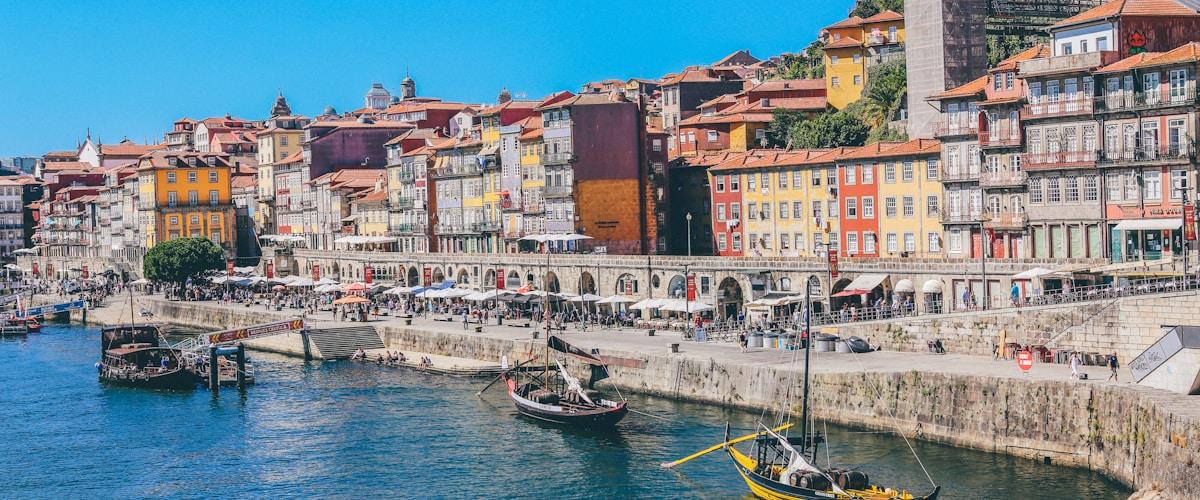
Portugal has issued over 400,000 new residence permits in recent years, making it the fastest-growing expat destination in Western Europe. Between its D7 passive income visa, one of Europe's first digital nomad visas, a revamped Golden Visa programme, and a path to EU citizenship in just 5 years, Portugal has built the most comprehensive immigration toolkit on the continent.
Portugal offers at least seven distinct visa routes for non-EU citizens, each designed for a different profile: retirees with pensions, remote workers earning abroad, investors, entrepreneurs, tech professionals, and students. The country's appeal goes beyond paperwork. With 300 days of sunshine per year, one of the lowest costs of living in Western Europe, world-class healthcare, and a safety record that consistently ranks it among the top 10 safest countries globally, Portugal has become the default choice for English-speaking expats looking for a European base.
What makes Portugal unique in 2026 is the speed of its citizenship pathway. While most EU countries require 8-10 years of residency, Portugal grants citizenship after just 5 years, and it allows dual nationality with no restrictions. This guide covers every step: choosing the right visa, understanding the new IFICI tax regime that replaced NHR, navigating the AIMA appointment system, estimating costs, and building a realistic timeline from decision to arrival.
Portugal Visa Types: Finding Your Route
Your visa choice determines your income requirements, work rights, tax obligations, and timeline to permanent residency and citizenship. Here is a detailed comparison of every major visa route available in 2026.
| Visa Type | Income / Requirement | Duration | Work Allowed? | Path to Citizenship |
|---|---|---|---|---|
| D7 (Passive Income) | €870/mo passive income | 2 yr, renewable | Yes | 5 years |
| Digital Nomad Visa | €3,480/mo remote income | 1 yr + 2 yr renewal | Remote only (non-Portuguese employer) | 5 years |
| Work Visa / Tech Visa | Job offer from Portuguese employer | 1 yr, renewable | Yes (for sponsoring employer) | 5 years |
| Golden Visa | €500,000 fund investment (no property) | 2 yr + 2 yr renewal | Yes | 5 years |
| Student Visa | University acceptance + €760/mo | 1 yr, renewable | Part-time (20 hrs/week) | Can switch to work visa |
| Startup Visa | Incubator endorsement + business plan | 1 yr + 2 yr renewal | Yes (own startup) | 5 years |
| D2 (Entrepreneur) | Business plan + capital investment | 2 yr, renewable | Yes (own business) | 5 years |
D7 Visa (Passive Income Visa)
The D7 is Portugal's most popular visa for retirees, freelancers, and anyone with regular passive income. Unlike similar visas in other countries, the D7 does not prohibit working in Portugal, which makes it uniquely flexible. The income threshold is based on the Portuguese minimum wage, currently approximately EUR 870 per month for a single applicant. A spouse adds 50% (EUR 435/month), and each dependent child adds 30% (EUR 261/month).
Qualifying income sources include pensions (government or private), rental income, investment dividends, savings interest, royalties, and regular freelance income. You need to demonstrate that this income is stable and recurring, typically through 3-6 months of bank statements. You also need comprehensive health insurance valid in Portugal (or proof of coverage through a bilateral social security agreement), a clean criminal record from every country where you have lived for 1+ years, and proof of accommodation in Portugal (a rental contract or property deed).
The D7 visa is initially granted as a 4-month temporary visa at the Portuguese consulate, which you then convert to a 2-year residence permit at AIMA after arriving in Portugal. It is renewable for successive 3-year periods. After 5 years, you can apply directly for Portuguese citizenship without needing to obtain permanent residency first. The key advantage over other European passive income visas is the low income threshold and the ability to work legally.
Digital Nomad Visa
Portugal launched its digital nomad visa in late 2022, targeting remote workers employed by non-Portuguese companies. The income requirement is set at 4 times the Portuguese minimum wage, approximately EUR 3,480 per month in 2026. You must work for a company registered outside Portugal or be a freelancer with clients predominantly based outside the country.
You need to demonstrate an employment or service contract that has been active for at least 3 months, along with proof of income (payslips, bank statements, or tax returns). Private health insurance valid in Portugal is required, as is a clean criminal record. You must not have been a Portuguese tax resident in the previous 5 years.
The digital nomad visa comes in two forms: a temporary stay visa valid for 1 year (for those planning a shorter stay) and a residence visa that leads to a 2-year residence permit. The residence permit version is the one that counts toward the 5-year citizenship timeline. Processing takes 30-60 days at the consulate. This visa is particularly popular with tech workers, designers, and consultants from the US, UK, and Brazil.
Work Visa and Tech Visa
The standard Portuguese work visa requires a job offer from a Portuguese employer. The employer must demonstrate that the position could not be filled by an EU/EEA citizen, though this requirement is often waived for highly skilled roles. The Tech Visa programme, launched to attract international talent to Portugal's growing tech sector, provides a fast-track process for workers hired by certified tech companies. Companies must be recognised by IAPMEI (the Portuguese agency for competitiveness and innovation) to participate in the Tech Visa scheme.
Portugal's tech scene has grown rapidly since the Web Summit relocated to Lisbon in 2016, and the country now hosts significant engineering hubs for companies including Farfetch, OutSystems, Talkdesk, and dozens of international firms with Lisbon offices. The Tech Visa simplifies and accelerates the work visa process for these companies, with processing times of approximately 10-20 business days compared to 60+ days for standard work visas.
Golden Visa (Post-October 2023)
Portugal's Golden Visa programme underwent its most significant reform in October 2023, when the real estate investment route was permanently eliminated. This was one of the most dramatic policy shifts in European immigration, as property purchases had previously accounted for over 90% of Golden Visa applications. The change was driven by concerns about the programme's impact on Portugal's housing affordability crisis.
The remaining qualifying investment routes in 2026 are:
Investment funds: EUR 500,000 minimum in qualifying Portuguese investment funds (venture capital, private equity, or funds that invest in Portuguese companies). This is now the most popular route.
Capital transfer: EUR 1,500,000 minimum transferred to a Portuguese bank account or invested in Portuguese financial instruments.
Job creation: Create at least 10 permanent jobs in Portugal.
Research contribution: EUR 500,000 minimum in scientific research activities conducted by Portuguese institutions.
Cultural heritage donation: EUR 250,000 minimum donated to the preservation or restoration of Portuguese national cultural heritage.
Source: AIMA Golden Visa programme guidelines, updated January 2026.
The Golden Visa's key advantage is that it does not require you to live in Portugal full-time. You only need to spend an average of 7 days per year in Portugal (or 14 days over each 2-year period) to maintain the visa. It grants the right to live and work in Portugal and across the Schengen Area. The initial permit is valid for 2 years, renewable for successive 2-year periods. After 5 years, you can apply for citizenship, making it one of the few investment migration programmes in the world that leads to an EU passport with minimal physical presence requirements.
Startup Visa
Portugal's Startup Visa programme targets non-EU entrepreneurs who want to establish an innovative company in Portugal. To qualify, you need an endorsement from a certified Portuguese incubator (such as Startup Lisboa, Beta-i, Tec Labs, or one of over 30 certified incubators nationwide). Your business idea must be technology-based or innovative, scalable, and have the potential to create jobs in Portugal.
You do not need to invest a specific amount of capital, but you must demonstrate sufficient financial means to support yourself during the initial phase (typically through savings or other income). The visa is initially valid for 1 year, renewable for 2-year periods. It grants the right to work for your own company and counts toward the 5-year citizenship timeline. The Startup Visa has been instrumental in building Lisbon's reputation as a European startup capital.
D2 Visa (Entrepreneur / Independent Worker)
The D2 visa is for non-EU nationals who want to open or invest in a business in Portugal but do not qualify for the Startup Visa (which requires incubator endorsement). You need a viable business plan, proof of sufficient investment capital, and evidence that your business will create value for the Portuguese economy. There is no fixed minimum investment amount, but the business plan must be credible and the investment proportional to the business type.
The D2 is also used by freelancers and independent professionals who want to establish themselves as self-employed workers (trabalhadores independentes) in Portugal. In this case, you need to demonstrate client contracts or a viable plan for generating income. The visa is initially granted for 2 years and is renewable.
Thinking about moving to Portugal?
Take our 2-minute assessment and find out which Portuguese visa route is the best fit for your profile.
Get Your Free Verdict →The IFICI Tax Regime: Portugal's New Tax Incentive
Portugal's famous Non-Habitual Resident (NHR) tax regime, which offered a flat 20% tax rate on Portuguese-sourced income and potentially zero tax on foreign pensions, was closed to new applicants at the end of 2024. Its replacement is the IFICI regime (Incentivo Fiscal a Investigacao Cientifica e Inovacao), which took effect in January 2025.
IFICI offers a flat 20% income tax rate on qualifying Portuguese-sourced employment and self-employment income for a period of 10 consecutive years. However, it is significantly more restrictive than NHR in terms of who qualifies. Eligible professional categories include:
Scientific researchers and university professors at Portuguese institutions
Tech professionals in qualified roles (software engineering, data science, AI, cybersecurity)
Startup founders with companies certified by the IAPMEI or ANI
Roles in industrial innovation and agricultural modernisation
Qualified professionals in companies with significant investment projects approved under the Tax Benefits Code
Note: Unlike NHR, IFICI does not cover pensioners, general freelancers, or remote workers without qualifying employment. Existing NHR holders continue under their original terms until their 10-year period expires.
To qualify for IFICI, you must not have been a Portuguese tax resident in any of the previous 5 tax years, and you must become a tax resident in Portugal. The application is made through the Portuguese tax authority (Autoridade Tributaria) after registering as a tax resident. For those who do not qualify for IFICI, Portugal's standard progressive income tax rates apply, ranging from 14.5% on the first EUR 7,703 to 48% on income above EUR 81,199, plus a 2.5% solidarity surcharge on income above EUR 80,000.
For someone earning EUR 80,000 per year in a qualifying IFICI profession, the difference is substantial: approximately EUR 16,000 in tax under IFICI versus EUR 25,000-28,000 under the standard progressive scale. Over 10 years, that is a saving of EUR 90,000-120,000. However, the narrower eligibility criteria mean that most expats, particularly retirees and general remote workers, will now pay standard Portuguese income tax rates.
Check your visa eligibility for free
Get Your Free Verdict →Stop guessing. Get your verdict.
See which countries match your income, skills, and goals. Free. 3 minutes.
Get Your Free Verdict →Step-by-Step: From Decision to Arrival
Here is a realistic timeline for moving to Portugal, broken down into actionable steps. This assumes a D7 or digital nomad visa application, which are the most common routes for independent movers.
Months 1-2: Preparation and NIF
Start by obtaining your NIF (Numero de Identificacao Fiscal), Portugal's tax identification number. Unlike most countries, you can and should get your NIF before applying for your visa. You can obtain it through a fiscal representative in Portugal (required for non-EU residents), which can be arranged remotely through services like Bordr, Anchorless, or a Portuguese lawyer. The cost is typically EUR 150-300 for the NIF application plus annual fiscal representative fees of EUR 100-200. The NIF is essential for opening a Portuguese bank account, signing a rental contract, and completing your visa application.
Simultaneously, gather your documents: valid passport (minimum 1 year remaining), criminal background check from every country you have lived in for 1+ years (apostilled and translated into Portuguese by a certified translator), proof of income (3-6 months of bank statements, pension statements, or employment contracts), proof of accommodation in Portugal (rental agreement, property deed, or a signed declaration from someone hosting you), and private health insurance valid in Portugal.
Month 3: Visa Application
Submit your visa application at the Portuguese consulate in your country of residence. Book your appointment well in advance; popular consulates (London, San Francisco, New York) can have 4-8 week wait times. The visa application fee is approximately EUR 90. Processing takes 30-60 business days for D7 visas and digital nomad visas. You will receive a 4-month temporary residence visa sticker in your passport.
Months 4-5: Arrival and AIMA Appointment
Once your visa is approved, enter Portugal within the validity period. Your first priority after arrival is booking your AIMA appointment (Agencia para a Integracao, Migracoes e Asilo) to convert your temporary visa into a residence permit. This is where the process can become challenging: AIMA inherited a massive backlog from the former SEF (Servico de Estrangeiros e Fronteiras), and appointment wait times in Lisbon and Porto can range from 2-6 months in 2026. The government has been making progress on reducing the backlog, but plan for delays.
While waiting for your AIMA appointment, you can live and work in Portugal on your temporary visa. Use this time to register with your local Junta de Freguesia (parish council), open a Portuguese bank account (Millennium BCP, CGD, Novo Banco, and ActivoBank are popular choices; you will need your NIF, passport, and proof of address), and get a Portuguese phone number (MEO, NOS, or Vodafone prepaid SIMs cost EUR 10-15).
Month 6+: Residence Permit and Social Security
At your AIMA appointment, you will submit your documents and biometrics for your residence permit card. The card typically arrives within 3-6 weeks. Once you have your residence permit, register with Portuguese social security (Seguranca Social) if you plan to work, and register at your local health centre (Centro de Saude) to access the SNS public healthcare system. Social security contributions for employees are approximately 11% of gross salary (employer pays an additional 23.75%). Self-employed workers pay 21.4% of 70% of their declared income.
Not sure which Portuguese visa is right for you?
Our free verdict checks your profile against every Portuguese visa route plus 1,900+ programmes across 200+ countries & territories. Takes 2 minutes.
Free VerdictCost of Living by City
Portugal remains one of the most affordable countries in Western Europe, though Lisbon has seen significant price increases since 2020. Here is what to expect for a single person in 2026, excluding rent:
Lisbon: EUR 800-1,100. Rent (1-bed city centre): EUR 1,000-1,400. Total: EUR 1,800-2,500.
Porto: EUR 700-950. Rent (1-bed city centre): EUR 800-1,100. Total: EUR 1,500-2,050.
Algarve (Faro/Lagos): EUR 650-900. Rent (1-bed city centre): EUR 700-1,000. Total: EUR 1,350-1,900.
Braga: EUR 600-800. Rent (1-bed city centre): EUR 550-750. Total: EUR 1,150-1,550.
Madeira (Funchal): EUR 650-850. Rent (1-bed city centre): EUR 600-900. Total: EUR 1,250-1,750.
Sources: Numbeo, Idealista, and INE (Portuguese statistics institute), March 2026. Rent figures reflect current market rates for new leases.
Braga and the Algarve stand out as exceptional value. A single person can live comfortably in Braga on EUR 1,300/month including rent, which is roughly a third of what you would spend in London, Paris, or Amsterdam. Even Lisbon, while increasingly expensive by Portuguese standards, remains 30-40% cheaper than comparable Western European capitals.
Groceries in Portugal are notably affordable. A weekly shop for one person costs EUR 35-55, benefiting from excellent local produce, affordable seafood, and competitive supermarket chains (Pingo Doce, Continente, Lidl, Aldi). Dining out is remarkably cheap: a full lunch menu (prato do dia) costs EUR 7-12 in most cities, a coffee (bica) is EUR 0.70-1.00, and a beer (imperial) is EUR 1.50-2.50. Portugal's wine is world-class and astonishingly affordable, with excellent bottles available from EUR 3-5 at supermarkets.
Healthcare: The SNS System
Portugal's public healthcare system, the Servico Nacional de Saude (SNS), provides universal coverage to all legal residents. It is funded primarily through taxation and is accessible once you register at your local Centro de Saude (public health centre) with your residence permit and NIF.
The SNS charges small co-payments (taxas moderadoras) for most services: EUR 4.50 for a GP visit, EUR 7 for a specialist consultation, and EUR 18 for an emergency room visit. However, numerous groups are exempt from co-payments: children under 18, pregnant women, people with chronic diseases, low-income residents (below a certain threshold), and unemployed individuals. Prescription medications are subsidised, with the government covering 15-90% of the cost depending on the drug category.
For visa applicants, private health insurance is initially required. Companies like Multicare, Medis, AdvanceCare, and Allianz offer comprehensive plans starting at EUR 30-100/month depending on age and coverage. Many expats maintain private insurance alongside SNS access for faster specialist appointments and access to private hospital networks such as CUF, Luz Saude, and Hospital da Cruz Vermelha.
Portugal's healthcare quality is strong and improving. The country ranks well in European healthcare indices, with modern hospital infrastructure in Lisbon and Porto. Dental care is not covered by the SNS but is affordable by European standards, with a routine check-up costing EUR 30-60 at a private practice.
Path to Permanent Residency and Citizenship
Portugal offers one of the most attractive residency-to-citizenship pathways in the European Union. The key milestones are:
Permanent residency after 5 years. After 5 years of continuous legal residence, you can apply for permanent residency (autorização de residência permanente). You must not have been absent from Portugal for more than 6 consecutive months or 8 months total during the 5-year period. Permanent residency grants the right to live and work indefinitely in Portugal and is renewed every 5 years.
Citizenship after 5 years. This is where Portugal truly stands out. You can apply for Portuguese citizenship after just 5 years of legal residence, one of the shortest timelines in the EU. Critically, you do not need to hold permanent residency to apply for citizenship; you can apply as soon as you complete 5 years on temporary residence permits. The requirements are:
Residency: 5 years of legal residence in Portugal (time on temporary and permanent permits counts)
Language: Pass the CIPLE A2 Portuguese language test (basic conversational level). The test covers listening, reading, writing, and speaking, and is administered by certified examination centres.
Criminal record: No serious criminal convictions
Connection to community: Demonstrated ties to Portugal (residency, employment, social connections)
Dual citizenship: Portugal allows dual citizenship with no restrictions. You do not need to renounce your original nationality.
Processing time: 12-18 months from application to decision in 2026. Apply through the IRN (Instituto dos Registos e Notariado) or at a Portuguese consulate if abroad.
Portuguese citizenship grants you an EU passport with visa-free or visa-on-arrival access to over 185 countries, the right to live and work anywhere in the EU/EEA, and access to EU healthcare and education systems across all member states. Given that Portugal allows dual citizenship universally, this is one of the most valuable second passports available.
Practical Tips for a Smooth Transition
Get your NIF remotely before arriving. This is the single most impactful thing you can do. With a NIF, you can open a Portuguese bank account (some banks like ActivoBank allow remote opening with a NIF), sign a rental contract, and set up utilities before you land. Without a NIF, you cannot do any of these things, and getting one in person involves queuing at the Financas office.
Learn basic Portuguese. While English is widely spoken in Lisbon, Porto, and the Algarve, daily interactions with government offices, healthcare providers, and landlords are significantly smoother in Portuguese. The CIPLE A2 exam required for citizenship is at a basic conversational level, so starting early with apps like Preply, iTalki, or local language schools gives you a head start. Most expats find Portuguese more challenging to learn than Spanish due to pronunciation, but written Portuguese is very accessible.
Budget for the AIMA wait. The gap between arriving and receiving your residence permit can stretch to 3-6 months. During this time, your temporary visa is valid, but some services (certain banks, car purchases, some rental agencies) may prefer seeing a residence permit. Have sufficient savings to cover this interim period without stress.
Understand Portuguese schedules. Shops and services operate differently than in Northern Europe or the US. Many smaller shops close for lunch (1-3 PM), and government offices typically operate mornings only (9 AM - 1 PM). Banks close at 3 PM. However, Portuguese schedules are less extreme than Spain's: dinner is typically at 8-9 PM, and the workday runs roughly 9 AM to 6 PM.
If you are considering Portugal alongside other European destinations, our comparison of Portugal vs Spain for expats breaks down the key differences, and our list of the cheapest European countries to move to provides broader context. For remote workers, see our guide to the best countries for digital nomads in 2026.
Frequently Asked Questions
How much money do I need to move to Portugal?
For a D7 visa, you need to prove passive income of at least EUR 870/month (based on the Portuguese minimum wage) for a single applicant, plus 50% (EUR 435/month) for a spouse and 30% (EUR 261/month) per child. For a digital nomad visa, the threshold is EUR 3,480/month (4x minimum wage). Beyond visa requirements, budget EUR 2,500-5,000 for initial setup costs (rental deposit, flights, NIF registration, insurance). Total first-year cost for a single person living in Lisbon: approximately EUR 22,000-30,000 including rent.
Is Portugal's golden visa still available?
Yes, but with major changes. Since October 2023, the real estate investment route has been eliminated. You can no longer qualify by purchasing property. The remaining routes include: investment fund subscriptions of at least EUR 500,000, capital transfers of EUR 1.5 million or more, creation of at least 10 jobs, research contributions, or donations of EUR 250,000+ to arts and cultural heritage. The fund investment route is the most popular option in 2026.
What replaced the NHR tax regime?
The Non-Habitual Resident (NHR) regime was closed to new applicants in 2024 and replaced by the IFICI (Incentivo Fiscal a Investigacao Cientifica e Inovacao) regime. IFICI offers a flat 20% income tax rate for 10 years to qualifying newcomers in specific professional categories: scientific researchers, university professors, tech professionals, startup founders, and roles in industrial and agricultural innovation. Unlike NHR, it does not cover pensioners or general freelancers. Existing NHR holders continue under the old rules until their 10-year period expires.
How long does it take to get Portuguese citizenship?
Portugal offers one of the fastest paths to EU citizenship: 5 years of legal residence. You do not need to hold permanent residency first. You must pass the CIPLE A2 Portuguese language test and have no serious criminal record. Portugal allows dual citizenship, so you do not need to renounce your original nationality. Processing times for citizenship applications are currently 12-18 months after submission.
Can I work on a D7 visa?
Yes. Unlike Spain's non-lucrative visa, Portugal's D7 visa does not prohibit employment. While it is designed for people with passive income (pensions, rental income, investments, dividends), D7 holders are legally permitted to work in Portugal, including employment and self-employment. This makes the D7 one of the most flexible visa pathways in Europe, as it has a lower income threshold than the digital nomad visa while still allowing you to work.
What is the AIMA backlog?
AIMA (Agencia para a Integracao, Migracoes e Asilo) replaced the former SEF (immigration and border service) in 2023. The transition created a massive backlog of pending residence permit applications, estimated at over 400,000 cases by early 2025. Wait times for initial appointments can range from 6 to 18 months depending on the region. The Portuguese government has been hiring additional staff and implementing digital processing to reduce the backlog. In 2026, wait times have improved but remain longer than pre-2023 levels, particularly in Lisbon and Porto.
Is healthcare free in Portugal?
Portugal's public healthcare system, the SNS (Servico Nacional de Saude), provides universal coverage to all legal residents. GP visits at public health centres (centros de saude) cost a small co-payment of EUR 4.50 (taxas moderadoras), and emergency visits cost EUR 18. Many groups are exempt from co-payments, including pregnant women, children under 18, and low-income residents. To access the SNS, you need to register at your local health centre with your residence permit and NIF. Private health insurance costs EUR 30-100/month and provides faster access to specialists.
Can I move to Portugal without speaking Portuguese?
Yes, you can move to Portugal without speaking Portuguese. English is widely spoken in Lisbon, Porto, and the Algarve, especially among younger Portuguese. You can navigate visa applications, banking, and daily life in English in major cities. However, learning basic Portuguese significantly improves your experience, especially outside tourist areas, when dealing with government offices, and in smaller cities like Braga or Coimbra. You will need to pass the CIPLE A2 Portuguese test to apply for citizenship after 5 years, so starting early is advisable.
Useful tools for your move
Wise — Transfer money internationally at real exchange rates (up to 8x cheaper than banks).
SafetyWing — Health insurance for nomads and expats, starting at $45/month.
NordVPN — Access your home banking and services from anywhere.
Preply — Learn the local language with 1-on-1 tutoring from native speakers.
Remitly — Send money home quickly with low fees and great exchange rates.
Airalo — Get a local eSIM before you land — data in 200+ countries, no roaming charges.
Ready to find out where you can actually move?
Our engine checks your profile against 1,900+ visa programmes in 200 countries. MOVE, DELAY, or AVOID — in 3 minutes.
Get Your Free Verdict →Related guides
- Portugal vs Spain for Expats
- Portugal Digital Nomad Visa Income Requirement 2026
- Cheapest European Countries to Move To
| Portugal Visa Type | Income Requirement | Processing Time | Duration | Path to Citizenship |
|---|---|---|---|---|
| D7 (Passive Income) | EUR 9,120/yr (min wage) | 4-8 weeks | 2 years, renewable | 5 years to PR/citizenship |
| D8 (Digital Nomad) | EUR 3,500/mo (4x min wage) | 4-8 weeks | 1 year, renewable | 5 years to PR/citizenship |
| Tech Visa | No fixed minimum | 2-4 weeks (fast-track) | 2 years | 5 years to PR/citizenship |
| Golden Visa (Investment) | EUR 250,000-500,000 investment | 6-12 months | 2 years, renewable | 5 years (7 days/yr min stay) |
| Work Visa (employer-sponsored) | Employer sets salary | 4-8 weeks | 1-2 years | 5 years to PR/citizenship |
| Startup Visa | Viable business plan | 4-8 weeks | 1-2 years | 5 years to PR/citizenship |
Tools we recommend
Services that make moving abroad easier. We may earn a commission at no extra cost to you.
Affiliate disclosure: links above may be affiliate links. We only recommend tools we've vetted.
Free: Your Personalised Country Shortlist
Take our 2-minute assessment and get a free report with your top 5 country matches, visa pathways, and cost data — delivered to your inbox.