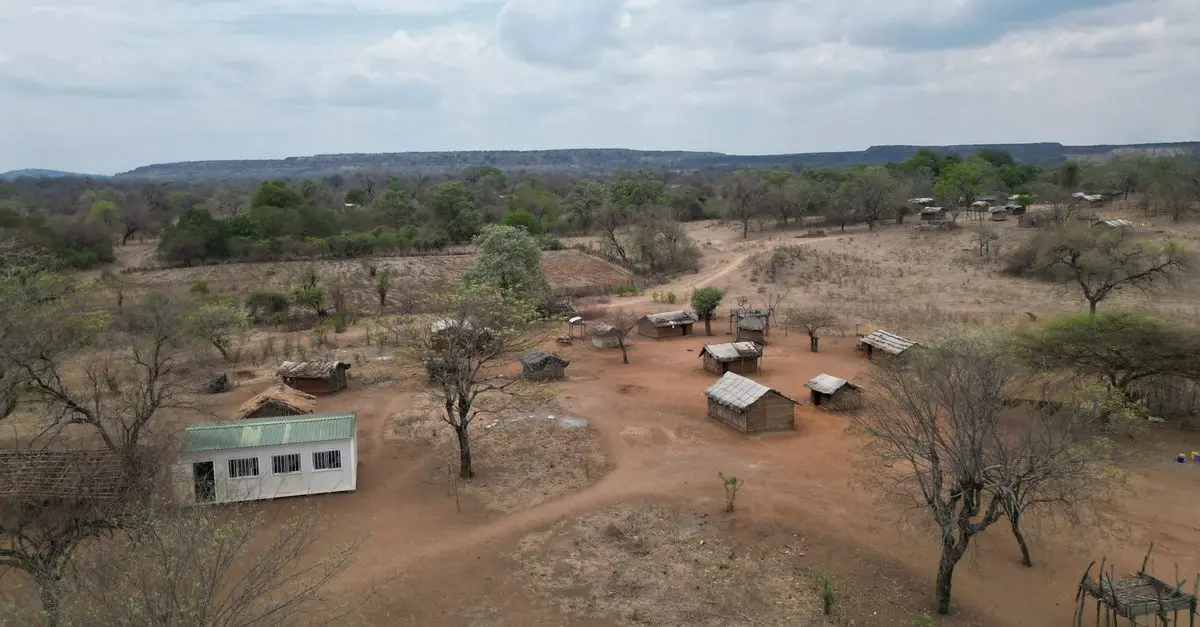
MW country scene

Asylum and Refugee Status in Malawi

MalawiHumanitarian protection

Explore the five recorded questions, answers and sources for this pathway.

Official link

What exactly is this: asylum, temporary protection, humanitarian admission, resettlement or another protection mechanism?

Asylum: a national refugee status determination procedure under Malawi's Refugees Act (Chapter 15:04), which gives effect to the 1951 Convention relating to the Status of Refugees, its 1967 Protocol and the 1969 OAU Refugee Convention. The Refugee Committee receives and hears applications for refugee status and may grant, deny, or cancel or revoke refugee status.

See recorded sources

Which population, circumstances or geographic group does the mechanism cover?

Persons outside their country of nationality (or, if stateless, of former habitual residence) owing to a well-founded fear of being persecuted for reasons of race, religion, nationality, membership of a particular social group or political opinion; and persons compelled to leave their place of habitual residence owing to external aggression, occupation, foreign domination or events seriously disturbing public order in part or all of their country of origin or nationality. The Act defines a refugee's family members as spouse or spouses, unmarried children under the age of twenty-one and other dependant relatives. Excluded are persons for whom there are serious reasons for considering they committed a crime against peace, a war crime or a crime against humanity, a serious non-political crime outside Malawi before entry, or acts contrary to the purposes and principles of the OAU and the UN.

See recorded sources
  • https://malawilii.org/akn/mw/act/1989/3/eng@2014-12-31
    “family member” means any spouse or spouses, unmarried children under the age of twenty-one and any other dependant relatives of the refugee;
  • https://malawilii.org/akn/mw/act/1989/3/eng@2014-12-31
    “refugee” means a person who-(a)owing to a well-founded fear of being persecuted for reasons of race, religion, nationality, membership of a particular social group or political opinion, is outside the country of his nationality and is unable or unwilling to avail himself of the protection of that country; or who, not having a nationality and being outside the country of his former habitual residence as a result of such events is unable or, owing to such fear, is unwilling to return to that country; or(b)owing to external aggression, occupation, foreign domination or events seriously disturbing public order in either part or the whole of his country of origin or nationality, is compelled to leave his place of habitual residence in order to seek refuge in another place outside his country of origin or nationality;
  • https://malawilii.org/akn/mw/act/1989/3/eng@2014-12-31
    A person shall not be considered to be a refugee under this Act if the Committee has serious reasons for considering that—(a)he has committed a crime against peace, a war crime, a crime against humanity, as defined in the international instruments drawn up to make provision in respect of such crimes;(b)he has committed a serious non-political crime outside Malawi prior to his entry; or(c)he has been guilty of acts contrary to the purposes and principles of the Organization of African Unity; and(d)he has been guilty of acts contrary to the purposes and principles of the United Nations Organization.

Where can protection be requested, and is this a direct application, border/in-country request, referral or other process?

Protection is requested in Malawi through the national procedure: applications for refugee status go to the Refugee Committee. A person who entered Malawi illegally to seek asylum must present himself to a competent officer (any immigration, border, police or security officer) within twenty hours of entry, or a longer period the officer accepts. A person claiming to be a refugee is permitted to enter and remain in Malawi for the period the Committee requires to process the application; a person who presents himself at a border to pass through Malawi to seek asylum in another country is permitted entry on conditions set by the Committee.

See recorded sources
Limits of the record
  • The Act (consolidated 2014) does not name a specific office, reception centre or address where the claim is lodged.
  • https://malawilii.org/akn/mw/act/1989/3/eng@2014-12-31
    “competent officer” means any immigration officer, border officer, police officer or security officer;
  • https://malawilii.org/akn/mw/act/1989/3/eng@2014-12-31
    (2)A person claiming to be a refugee shall be permitted to enter and remain in Malawi for such period as the Committee may require to process his application for refugee status.
  • https://malawilii.org/akn/mw/act/1989/3/eng@2014-12-31
    A person who presents himself to a competent officer at a border and applies for admission into Malawi for the purpose of proceeding to another country where he intends to seek asylum as a refugee shall be permitted entry in Malawi upon such conditions as may be determined by the Committee either generally or specially.
  • https://malawilii.org/akn/mw/act/1989/3/eng@2014-12-31
    (4)A person who has illegally entered Malawi for the purpose of seeking asylum as a refugee shall present himself to a competent officer within twenty hours of his entry or within such longer period as the competent officer may consider acceptable in the circumstances and such person shall not be detained, imprisoned, declared prohibited immigrant or otherwise penalized by reason only of his illegal entry or presence in Malawi unless and until the Committee has considered and made a decision on his application for refugee status.

What happens after the request: registration, family handling, major support and rights where officially stated?

The Committee notifies its decision in writing and records reasons for a refusal, cancellation or revocation; the applicant may appeal to the Minister within fourteen days, and the Minister's decision is final and not subject to review by any court. UNHCR reports that in 2025 all individuals seeking international protection were able to register and enter the asylum system, registration was individual with biometric enrolment, refugees and asylum-seekers had access to free comprehensive primary health care, and refugees continued to face restrictive encampment policies and limits on freedom of movement and formal employment; UNHCR also reports the absence of an effective appeal mechanism after first-instance rejection.

See recorded sources
Limits of the record
  • Family handling during the procedure is not described: the Act only defines family members.
  • Registration, health care and encampment statements come from a UNHCR 2025 operational report, not from a rule.

Which competent authority, UN body or official assistance channel should the person use?

Answer not available

These are the answers currently recorded in the catalogue. A missing or partial answer is not an eligibility decision.

Your story.
Your next step.

Explore pathways in Malawi →