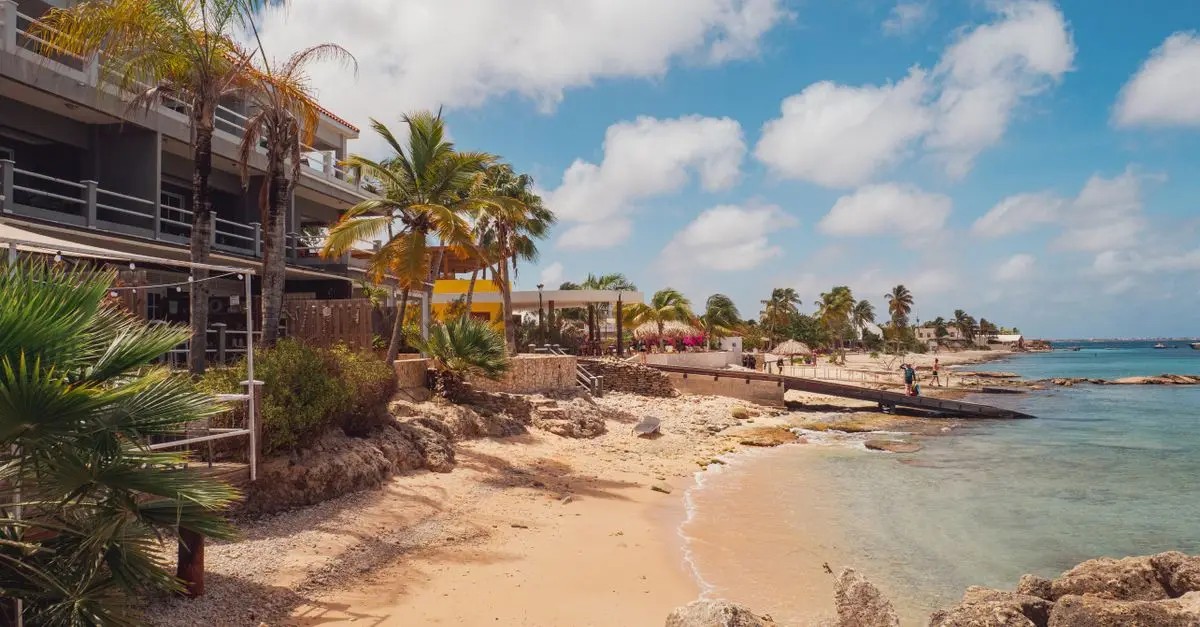
AW country scene

Non-Applicability Declaration - Aruba Dutch Connection

ArubaAncestry and return

Explore the five recorded questions, answers and sources for this pathway.

Official link

What family, citizenship, ethnic, historical or former-resident connection creates access to this route?

Persons who have been married for at least five years to and cohabiting with a person under Article 1 or Article 3(a-f) LTU and have had at least five years of admission and main residence in Aruba, along with their minor children, are admitted by law.

See recorded sources
Limits of the record
  • The document does not explicitly state whether former residents without current Dutch nationality can access this route.
  • The document does not address ethnic or historical connections beyond the specified Dutch nationality and residence criteria.
  • 1.4.1 TOELATING VAN RECHTSWEGE KRACHTENS DE LTU
    Personen die gedurende ten minste vijf jaar gehuwd zijn met en inwonen bij een persoon als bedoeld in artikel 1, eerste lid, of een persoon als bedoeld in dit artikel, eerste lid, onderdeel a tot en met f, en gedurende een periode van ten minste vijf jaar toelating en hoofdverblijf in Aruba hebben of hebben gehad, alsmede de uit dat huwelijk geboren of staande dat huwelijk geadopteerde of erkende minderjarige inwonende kinderen;

How far back can the qualifying connection extend, and what important transmission limitations exist?

The connection can extend one generation back through a parent for category (d): a Dutch national born outside Aruba qualifies if at least one parent belongs or belonged to categories (a), (b) or (c); if the parent is deceased, they must have belonged to one of those categories before death. For category (c), the individual themselves must have had ten years of admission and main residence in Aruba. The official source does not state whether grandparents or more remote ancestors can qualify.

See recorded sources
Limits of the record
  • Whether grandparents or more remote ancestors can qualify is not established in the supplied evidence.
  • Handbook lines 1800-2125, section 1.3.1
    Art. 1 lid 1 sub d: Nederlanders, als zodanig buiten Aruba geboren, van wie ten minste een van de ouders behoort of, overleden zijnde, vóór dat overlijden, behoorde tot de personen, bedoeld in de onderdelen a, b of c.

What records are central to proving the lineage or historical connection?

For category 1D, the applicant must provide a copy of their birth certificate with legalisation or apostille not older than one year (unless issued in a country within the Kingdom of the Netherlands, which requires no legalisation or apostille), a sworn translation by a translator sworn in Aruba if it is not in Dutch, English or Spanish, the original for inspection, and copies of the parents' passports. The official source does not state the records required for categories 1A, 1B and 1C.

See recorded sources
Limits of the record
  • The specific records required for Articles 1(a)-(c) are not established in the supplied evidence.
  • Section E, items 1-2
    E. TEN BEHOEVE VAN INDIENING 1 D LTU 1. Een kopie van de geboorteakte van de aanvrager, voorzien van een legalisatie of apostille die niet ouder is dan één jaar, afhankelijk van het al dan niet deelnemen van het land van afgifte aan het Apostilleverdrag. Geboorteakten die zijn afgegeven in één van de landen binnen het Koninkrijk der Nederlanden behoeven geen legalisatie of apostille. Indien de geboorteakte is opgesteld in een andere taal dan het Nederlands, Engels of Spaans, dient een beëdigde vertaling te worden overgelegd, opgesteld door een op Aruba beëdigde vertaler. Het originele document dient ter inzage te worden overgelegd. 2. Kopie van het paspoort van de ouders.

Does the pathway result in a visa, residence permit, right of return, citizenship or another status?

Persons falling under Article 1 of the LTU are not subject to an admission requirement and do not need a permit to live in Aruba; they have the right to request a declaration that the provisions of the LTU do not apply to them. The official source does not state whether this declaration constitutes a visa, right of return or citizenship.

See recorded sources
Limits of the record
  • Whether the declaration is a visa, right of return or citizenship is not established in the supplied evidence.
  • Section 1.3.3
    Nederlanders die onder de werking van artikel 1 van de LTU vallen, zijn niet toelatings plichtig en hebben derhalve geen vergunning nodig om in wonen op Aruba. Zij hebben uiteraard wel het recht een verzoek in te dienen voor de afgifte van een verklaring waaruit blijkt dat de bepalingen van de LTU niet op hen van toepassing zijn.

What application progression, residence obligations, family consequences or further citizenship/residence possibilities follow?

For the application for a declaration that the LTU does not apply, no appointment is required and the person may report daily to DIMAS for its issuance. Family members who do not themselves fall under Article 1, 3 or 7a of the LTU are referred to the policy on family reunification or formation. The official source does not state renewal, residence obligations or further citizenship possibilities.

See recorded sources
Limits of the record
  • Renewal, residence obligations and further citizenship possibilities are not established in the supplied evidence.
  • Section 1.3.3.1
    Voor de indiening van een aanvraag voor de afgifte van een verklaring is geen afspraak vereist en kan betrokkene zich dagelijks melden bij de DIMAS voor de afgifte daarvan.
  • Section 1.3.3.2
    Verwezen wordt naar het hoofdstuk met betrekking tot het beleid ten aanzien van tot gezinshereniging of –vorming voor gezinsleden van Nederlanders die vallen onder artikel 1 van de LTU, indien deze gezinsleden zelf niet vallen onder artikel 1, 3 of 7a van de LTU.

These are the answers currently recorded in the catalogue. A missing or partial answer is not an eligibility decision.

Your story.
Your next step.

Get your free results