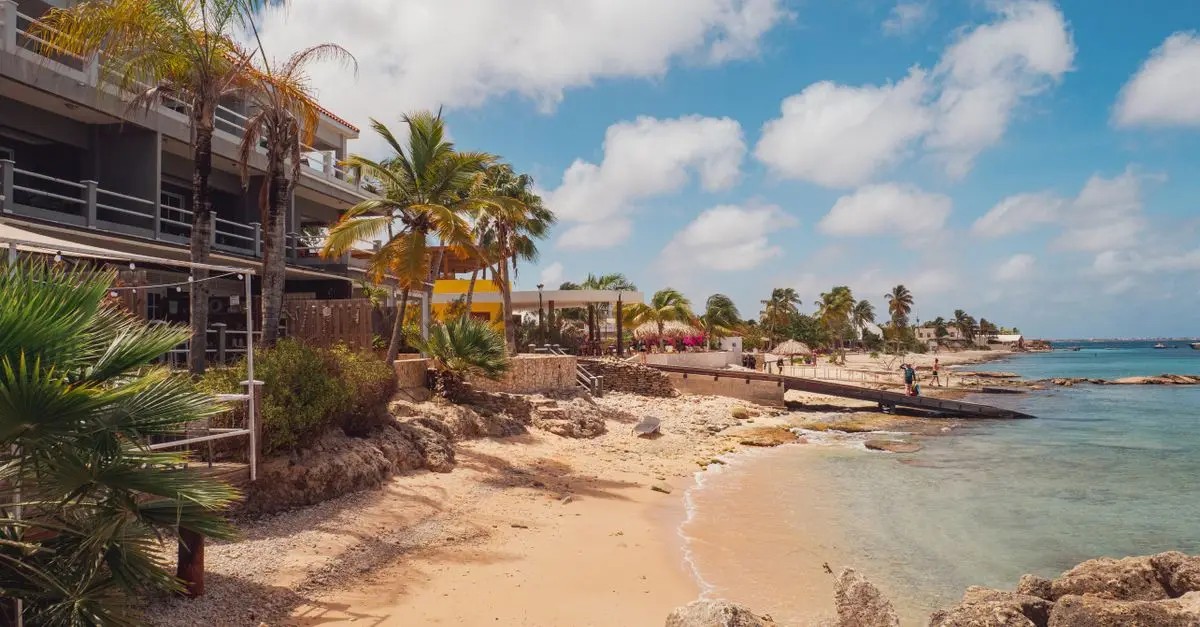
AW country scene

Caribbean Short-Stay Visa or Visa-Exempt Visit

ArubaShort stays and visits

Explore the five recorded questions, answers and sources for this pathway.

Official link

For the relevant traveller scope, is a visa, electronic authorisation, visa on arrival or no advance visa normally required?

Whether a visa is required depends on nationality and other factors; not everyone needs a visa, and in most cases no visa is needed for transit or cruise ship travel. The official source does not provide the full nationality matrix and refers travellers to a separate tool to check their situation.

See recorded sources
Limits of the record
  • The source does not provide the full nationality matrix or list which nationalities require a visa, are visa-exempt, or qualify for visa on arrival or electronic authorisation.
  • content_text
    Not everyone needs a visa to visit the Caribbean parts of the Kingdom. This depends on a number of factors, including your nationality.
  • content_text
    In most cases, you do not need a visa to transit through the Caribbean parts of the Kingdom or if you are travelling on a cruise ship.
  • content_text
    Check whether you need a visa

What short-visit purposes does this route cover?

The checked official sources did not provide enough route-specific evidence to confirm the permitted short-visit purposes.

See recorded sources
Limits of the record
  • The source does not enumerate permitted purposes such as tourism, business, family visits, or medical treatment.
  • content_text
    A short-stay Caribbean visa lets you travel to and between the Caribbean parts of the Kingdom of the Netherlands (Aruba, Bonaire, Curaçao, Saba, St Eustatius and St Maarten).
  • content_text
    If you want to stay in the Caribbean parts of the Kingdom for 90 days or less, you may need a short-stay visa.

What maximum stay, rolling-period rule, validity and entry rules apply?

A short-stay Caribbean visa allows a stay in the Caribbean parts of the Kingdom for a maximum of 90 days within a 180-day period. For Aruba, the visa states how long the holder can stay; the maximum is 180 consecutive days within a 365-day period, but it may be shorter. For Curaçao, the maximum is 30 consecutive days. For Bonaire, Saba, St Eustatius and St Maarten, the maximum is 90 consecutive days in a 180-day period. A single-entry Caribbean visa allows entry once; a multiple-entry Caribbean visa allows entry multiple times.

See recorded sources
Limits of the record
  • The source does not state visa validity periods or entry rules beyond single/multiple entry.
  • The source does not state rolling-period rules beyond the 180-day period for the overall stay and the 365-day period for Aruba.
  • content_text
    A short-stay Caribbean visa lets you stay in the Caribbean parts of the Kingdom for a maximum of 90 days within a 180-day period.
  • content_text
    Aruba Your visa states how long you can stay in Aruba. The maximum is 180 consecutive days within a 365-day period. But it may be shorter for you.
  • content_text
    Curaçao You can stay in Curaçao for a maximum of 30 consecutive days.
  • content_text
    Bonaire, Saba, St Eustatius and St Maarten You can stay in Bonaire, Saba, St Eustatius and St Maarten for a maximum of 90 consecutive days in a 180-day period.
  • content_text
    A single-entry Caribbean visa allows you to enter the Caribbean parts of the Kingdom once. A multiple-entry Caribbean visa allows you to enter multiple times.

What important funds, accommodation, invitation, insurance, onward-travel or passport evidence may be required?

The checked official sources did not provide enough route-specific evidence to confirm the funds, accommodation, invitation, insurance, onward-travel and passport evidence.

See recorded sources
Limits of the record
  • The source does not list required funds, accommodation, invitation, insurance, onward-travel, or passport evidence.
  • content_text
    How and where you apply for a visa depends on the country you are in. Enter your country of residence to see where you can apply and which documents you need for your application.

Where/how is permission obtained when required, and under what important circumstances can a stay be extended or changed?

Application location and procedure depend on the country of residence. For Curaçao, stays over 30 days but under 90 days may be extended via the admission authority; the official source does not state extension rules for Aruba. Stays longer than 90 days require a residence permit. If a short-stay Caribbean visa application is rejected, an objection may be possible depending on the country applied for; for St Maarten no objection is possible, and for other Caribbean countries the rejection letter explains how to object.

See recorded sources
Limits of the record
  • The source does not provide extension or change-of-status rules for Aruba.
  • The source does not provide specific application locations or procedures for Aruba beyond directing users to a country-of-residence tool.
  • content_text
    How and where you apply for a visa depends on the country you are in. Enter your country of residence to see where you can apply and which documents you need for your application.
  • content_text
    Curaçao You can stay in Curaçao for a maximum of 30 consecutive days. Do you want to stay for more than 30 days but fewer than 90 days? Read more about extending your visa after your arrival on the website of the admission authority (Toelatingsorganisatie) for Curaçao.
  • content_text
    If you wish to stay longer than 90 days, you must apply for a residence permit .
  • content_text
    If your application for a short-stay Caribbean visa was rejected, you may be able to lodge an objection. This depends on the country you applied for a visa for. If your visa for St Maarten was rejected, you cannot lodge an objection. If your visa for one of the other Caribbean countries was rejected, the rejection letter explains how you can lodge an objection.

These are the answers currently recorded in the catalogue. A missing or partial answer is not an eligibility decision.

Your story.
Your next step.

Explore pathways in Aruba →