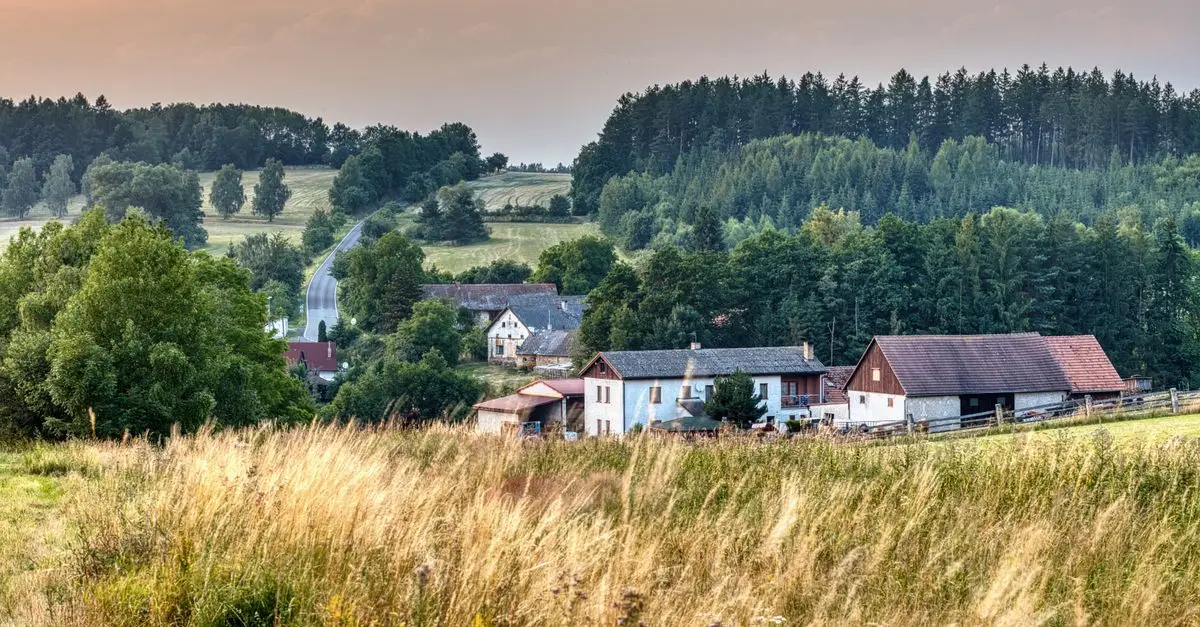
🇨🇿 Czech Republic at a Glance

Visa Programs
5
Processing Time
2-6 months
Min Income (EUR)
€14,400
Language Requirement
A1 Czech required for Permanent Residency; no language requirement for initial work visas
Path to PR
5 years of legal and continuous residence
Path to Citizenship
10 years legal residence (5 years for some categories); dual citizenship generally not permitted
Quality of Life Index
7.0/10
Cost of Living (Single/mo)
€EUR 900-EUR 1,800

Visa Programs

ProgramMin Income / PointsMin SavingsLanguageProcessing (Official / Real)Path to PRPath to CitizenshipSource
Employee Card (Zaměstnanecká karta)Salary at or above Czech minimum wage: CZK 18,900/month (~€760/month, €9,120/year) — in practice most positions require significantly more60-120 days (official: 60 days; real-world often longer due to embassy and MVČR backlogs) / —
EU Blue Card (Modrá karta EU)Salary of at least CZK 74,000/month (~€3,000/month, €36,000/year) — 1.5x the average gross monthly wage60-90 days / —
Živnostenský List — Self-Employment/Freelance ResidenceNo fixed minimum — must demonstrate sufficient means of subsistence (typically CZK 15,000+/month, ~€600+, through savings or income)60-90 days (residence permit) + 1-2 weeks (trade licence registration) / —
Student Visa + Post-Study Work RightsSufficient funds: approximately CZK 4,500/month (~€180/month) officially, though realistically CZK 15,000-20,000/month (~€600-800) for comfortable student living30-60 days / —
Intracompany Transfer (ICT Permit)Salary at minimum wage level (CZK 18,900/month, ~€760) but in practice typically professional-level salaries30-60 days (faster than standard Employee Card) / —

Financial Requirements

Settlement Funds: No mandatory savings requirement for employment visas. Freelance/self-employment: must demonstrate sufficient means (typically CZK 200,000-500,000 in savings or equivalent income evidence). No investment requirement for standard immigration.

Income Thresholds

Employee Card (minimum)

EUR 9,120/year

CZK 18,900/month (Czech minimum wage). In practice, most qualifying roles pay CZK 30,000-80,000/month. The minimum is a legal floor, not a realistic income for Prague.

EU Blue Card

EUR 36,000/year

CZK 74,000/month — 1.5x the average Czech gross salary. Targets senior professionals and specialists.

Živnostenský List (practical minimum)

EUR 14,400/year

No legal minimum, but approximately CZK 30,000/month (~€1,200) is needed to cover living costs and mandatory insurance contributions in Prague. Most successful freelancers earn significantly more.

Investment Minimums

Czech Company Formation

EUR 1

Czech Republic has no golden visa or investor visa program. The minimum share capital for an s.r.o. (limited liability company) is CZK 1 (effectively symbolic). Investors must obtain residency through employment or freelance routes as a company representative.

Important Notes

Czech tax system: 15% flat income tax rate on salary income (plus 23% for income above CZK 1,935,552/year). Social insurance: 11% employee contribution (6.5% pension + 4.5% health insurance). Employer contributions are significantly higher (34%). Net take-home for a CZK 50,000/month salary (~€2,000): approximately €1,540/month. VAT is 21% on most goods. Corporate tax: 19%. Czech Republic uses the Czech koruna (CZK), not the euro — conversion rates fluctuate. Budget approximately CZK 20,000-30,000 (€800-1,200) for immigration attorney fees for the full Employee Card process. Mandatory health insurance registration within 8 days of starting work.

Reality Check

Processing Times — Official says: Employee Card: 60 days. Blue Card: 60 days.
Reality: The official 60-day clock starts from when the application is submitted — but getting an appointment at the relevant Czech embassy can take 3-6 months in high-demand countries (India, Ukraine, Philippines, US). The Ministry of Interior (MVČR) then processes within 60 days of submission, but administrative extensions are common. Total time from decision to card in hand: 4-8 months is typical. Embassy appointment scarcity is the biggest bottleneck.
Czech Language — Official says: No Czech language requirement for work visas
Reality: True for work permits, but Czech bureaucracy overwhelmingly operates in Czech — MVČR letters, tax forms, health insurance correspondence, and landlord communications are in Czech. Working at a Czech company without Czech will limit you to international roles. Czech language is required for permanent residency (A1 level) and is practically necessary for daily life outside Prague's expat bubble. The A1 Czech test for PR is not trivial — Czech grammar is complex.
Prague Housing Costs — Official says: Prague is affordable relative to Western European capitals
Reality: Prague's affordability advantage has narrowed since 2015-2019. Central Prague (Prague 1, Vinohrady, Žižkov) rents have increased 60-80% in that period. A quality 1BR in Vinohrady costs €800-1,100/month — still cheaper than London or Amsterdam, but no longer the bargain destination it once was. Brno and Ostrava remain genuinely affordable. Outside the center, Prague still offers better value: Prague 5, 6, and Holešovice have strong infrastructure at 20-30% lower rents.
MPSV Vacancy Registration for Employee Card — Official says: Employers must post the vacancy for 30 days before applying for an Employee Card
Reality: This requirement creates a minimum 30-day delay before the employer can even start the Employee Card application. Add embassy appointment waits and MVČR processing: the practical timeline from job offer to work start is often 5-9 months. For shortage occupations (IT, healthcare, engineering), some exemptions exist and processing is faster under specific government programs. Many employers find this timeline unworkable for international hiring and instead look to EEA nationals.

Common Mistakes to Avoid

Insider Tips

Who Qualifies?

Moderate
Tech Workers
Best visa: EU Blue Card (if salary qualifies) or Employee Card
The Czech Republic has a significant and growing tech sector — Prague is home to major tech company offices (Microsoft, Oracle, Red Hat, Accenture, Avast, Lista.cz, Twisto) and a developing startup scene. IT professionals are a shortage occupation, which means MPSV exemptions from the 30-day vacancy posting requirement apply. Local tech salaries range CZK 50,000-150,000/month (€2,000-6,000), which is lower than Western Europe but far higher than Czech average wages. Foreign tech workers find Prague an excellent quality-of-life choice relative to their salary.
Moderate
Healthcare
Best visa: Employee Card (employer-sponsored, healthcare facility)
Czech healthcare has significant staffing shortages — doctors and nurses are in high demand. Foreign medical degrees require recognition through the Czech Medical Chamber (Česká lékařská komora). Czech language at least B2 level is essential for clinical practice. Doctors who speak Czech can work in both public and private hospitals. Nurses from EU/EEA countries can work directly; non-EU nurses face additional credential recognition requirements. Salaries are lower than Western Europe but cost of living offsets this.
Moderate
Skilled Trades
Best visa: Employee Card (shortage occupation exemptions apply to some trades)
Czech construction, manufacturing, and trades sectors have experienced significant labor shortages. Some trade occupations qualify for shortage occupation exemptions under the Employee Card process. Wages for tradespeople in the Czech Republic have been rising but remain below Western European rates. A Ukrainian community has significantly filled trades labor needs, but non-Ukrainian tradespeople with specialized skills can find opportunities. German language is an asset in construction and manufacturing.
Moderate
Remote Workers
Best visa: Živnostenský List (self-employment/freelance residence permit)
The Czech Republic does not have a dedicated digital nomad visa. Remote workers with foreign clients use the Živnostenský list route to establish legal residency as self-employed persons. Prague's quality of life, EU base, affordable costs, and growing coworking scene (HubHub, Spaces, Impact Hub) make it a strong choice. The process is more complex than a simple digital nomad visa — factor in 3-4 months for the full setup. Once established, it is a stable, legitimate EU residency.
Hard
Retirees
Best visa: No dedicated retirement visa — must use financially sufficient long-term residence permit
The Czech Republic does not have a retirement visa. Retirees without employment or self-employment must apply for a long-term residence permit for 'other purposes' demonstrating sufficient financial means — a complex and less defined process. Some retirees use the freelance route even if not actively working (maintaining a dormant živnostenský list). EU/EEA retirees have free movement rights. For non-EU retirees, the Czech Republic is not among the easiest retirement destinations. Consider Portugal, Spain, or Panama instead.
Moderate
Investors
Best visa: Employee Card via Czech company formation or ICT permit (if through existing entity)
The Czech Republic has no golden visa or investor visa program. Investors must establish a Czech legal entity and obtain residency through the employment or freelance routes as a company representative. The Czech business environment is solid — transparent, EU-integrated, with strong rule of law. Corporate tax is 19%. Prague and Brno have active startup ecosystems. The Czech Republic's position in Central Europe makes it an attractive EU base for businesses targeting both Western and Eastern European markets.

Cost of Living

Prague
Single (monthly)€1,400
Family (monthly)€2,500
Rent 1BR (center)€900
Rent 1BR (periphery)€650
Central Prague (Vinohrady, Žižkov, Nusle, Holešovice) rents have risen significantly — a quality 1BR now costs €800-1,100/month. Further out (Prague 5, 8, 9) is 25-35% cheaper with good tram/metro connections. Local food and dining remain very affordable — a hospoda (pub) set lunch costs €4-7. Public transport monthly pass: €25. Prague is still notably cheaper than Paris, Amsterdam, or Munich for equivalent quality of life.
Brno
Single (monthly)€950
Family (monthly)€1,700
Rent 1BR (center)€550
Rent 1BR (periphery)€400
The Czech Republic's second city and tech hub. 30-40% cheaper than Prague. Major university presence (Masaryk University, Brno University of Technology) creates a young, international atmosphere. Red Hat, IBM, Accenture, and DHL have significant offices. Good quality of life, strong food scene, and easy rail connections to Prague (2.5 hours, €8-15). Growing expat community.
Ostrava
Single (monthly)€700
Family (monthly)€1,300
Rent 1BR (center)€380
Rent 1BR (periphery)€280
Czech Republic's third-largest city in the north-east. Post-industrial city undergoing significant regeneration. Very affordable — one of the cheapest major Czech cities. Smaller expat community than Prague or Brno. Close to Polish border (Katowice 50km). Good for those seeking very low cost of living and proximity to manufacturing/engineering employers.

Salary Data (Annual, EUR)

ProfessionJunior (Gross / Net)Mid (Gross / Net)Senior (Gross / Net)
Software Engineer€22,000 / €16,800€38,000 / €28,000€60,000 / €43,000
Nurse€14,000 / €11,000€20,000 / €15,400€28,000 / €21,000
Doctor€28,000 / €21,000€46,000 / €33,500€72,000 / €50,500
Civil Engineer€18,000 / €14,000€30,000 / €22,500€46,000 / €33,500
Accountant€14,000 / €11,000€22,000 / €16,800€36,000 / €27,000
Teacher€13,000 / €10,200€18,000 / €14,000€26,000 / €20,000
Project Manager€22,000 / €16,800€36,000 / €27,000€55,000 / €40,000
Electrician€12,000 / €9,500€18,000 / €14,000€26,000 / €20,000
Chef€11,000 / €8,700€16,000 / €12,500€24,000 / €18,600
Marketing Manager€18,000 / €14,000€30,000 / €22,500€48,000 / €35,000

Converted from CZK. Net reflects Czech 15% flat income tax (23% above CZK 161,296/month), 11% employee social and health insurance contributions. Effective take-home is approximately 72-78% of gross for typical earners.

Downloadable Data

Frequently Asked Questions

What is the Employee Card (Zaměstnanecká karta) and how do I get one?

The Zaměstnanecká karta is the main work and residence permit for non-EU nationals. Your employer must register the position in the MPSV Central Register of Vacancies for 30 days first (exemptions apply for shortage occupations). Then you apply at a Czech embassy. Requirements: job offer, proof of accommodation, qualifications, and clean criminal record. Valid up to 2 years, renewable. After 5 years, you qualify for Permanent Residence.

Who qualifies for the EU Blue Card in the Czech Republic?

The EU Blue Card requires a university degree (3+ years), a job offer in a qualifying role, and a salary of at least CZK 74,000/month (~€3,000/month or €36,000/year — 1.5x average Czech gross salary). After 3 years, Blue Card holders gain enhanced EU mobility rights to work in other EU member states.

What is the Živnostenský list (Trade Licence) for freelancers?

The Živnostenský list allows freelancers to operate legally in Czech Republic. For non-EU nationals, you register a trade at the Živnostenský úřad and apply for a long-term business residence permit. No fixed minimum income — must demonstrate sufficient means. Mandatory social and health insurance contributions apply (approximately €160-320/month). Popular with IT freelancers and designers serving international clients from Prague.

How affordable is the Czech Republic compared to Western Europe?

Significantly cheaper than Western Europe despite recent cost increases. Prague: comfortable single lifestyle ~€1,400/month including rent. A 1BR in central Prague costs €700-1,100/month. Pub lunches cost €4-7. Public transport monthly pass: €25. Brno is 30-40% cheaper than Prague. Czech Republic uses the koruna (CZK), not the euro, providing additional currency flexibility.

How quickly can I get EU Permanent Residency in the Czech Republic?

After 5 years of legal and continuous residence. Requirements: A1 Czech language test, no criminal record, proof of accommodation and financial means, and no interruptions exceeding 10 consecutive months. Czech PR then grants free movement rights in the EU and a pathway to Czech citizenship after 10 years total legal residence.

Is the Czech Republic English-friendly for expats?

Prague is increasingly English-friendly in tech, business, and hospitality. Daily life (grocery shopping, restaurants, Uber) is manageable in English in international neighborhoods. Government offices, some healthcare settings, and life outside Prague operate primarily in Czech. Learning basic Czech is strongly recommended — it transforms bureaucratic interactions.

Can I bring my family to the Czech Republic on a work permit?

Yes. Spouses and dependent children can apply for long-term residency through family reunification. Family members can work after 9 months of residence. Apply simultaneously with the primary applicant's Employee Card application. Budget 60-120 days processing time.

What is it really like to live in Prague as a foreigner?

Prague is one of Europe's most beautiful and liveable cities. Excellent public transport, strong cultural scene, safe streets, and a large international community. Downsides: Czech immigration bureaucracy is strict and complex, Czech language is needed for bureaucracy and career progression, and central Prague housing has become more expensive. Vinohrady, Žižkov, and Holešovice are popular expat areas. Brno is a compelling alternative — 30-40% cheaper with a similar quality of life.

Find out if you qualify for the Czech Republic

Our free assessment matches your profile against Czech Republic's 12 visa programs in under 2 minutes.

Get Your Free Verdict