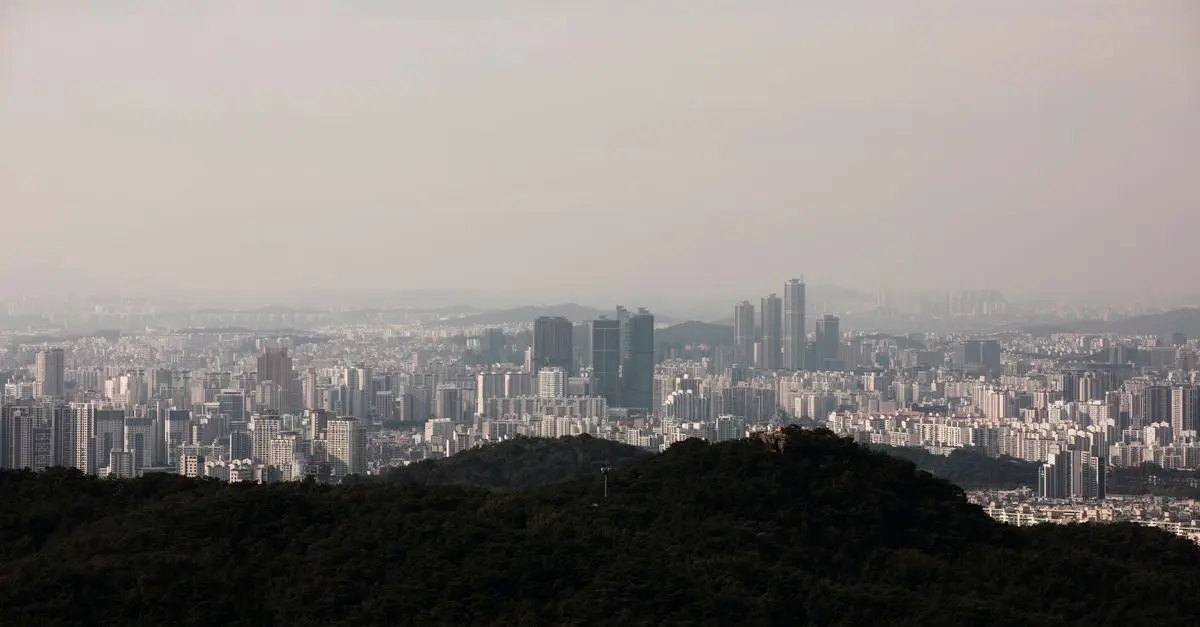
🇰🇷 South Korea at a Glance

Visa Programs
5
Processing Time
2-12 weeks
Min Income (EUR)
€22,000
Language Requirement
No language requirement for work visas; TOPIK Korean language test required for F-2-7 points system (beneficial) and for citizenship
Path to PR
Minimum ~3 years via F-2-7 points system; 5 years on other routes
Path to Citizenship
5 years legal residence; dual citizenship not permitted for most naturalized citizens
Quality of Life Index
7.4/10
Cost of Living (Single/mo)
€EUR 1,400-EUR 2,500

Visa Programs

ProgramMin Income / PointsMin SavingsLanguageProcessing (Official / Real)Path to PRPath to CitizenshipSource
E-7 Visa (Specially Designated Activities)Salary at or above GNI per capita for the relevant year (~€28,000-32,000/year in practice for most roles)4-8 weeks / —
F-2-7 Points-Based Long-Term Resident Visa80 points minimum across categories. Income component: annual income ≥20 0% of GNI per capita adds maximum points (~€55,000+/year for top score)4-8 weeks / —
D-8 Corporate Investment VisaUSD 100,000 (~€92,000) minimum investment in a Korean corporation (D-8-1 for founders); USD 300,000 (~€276,000) for some sub-categories6-12 weeks / —
C-38 Workation Visa (Digital Nomad Visa)Annual income of USD 84,600/year (~€78,000/year, approximately 200% of GNI per capita)2-4 weeks / —
E-2 English Teaching VisaSalary per employment contract — typically KRW 1,800,000-3,000,000/month (~€1,200-2,000/month); most teaching positions include free or subsidised housing4-8 weeks / —

Financial Requirements

Settlement Funds: No general savings requirement for work visas (E-7, E-2). D-8 investment visa requires USD 100,000+ investment. Workation visa requires income proof only.

Income Thresholds

E-7 Skilled Worker

EUR 22,000/year

Must be at or above GNI per capita threshold (approximately KRW 35-40 million/year). Actual salaries for E-7 holders typically €25,000-55,000 depending on industry.

C-38 Workation (Digital Nomad)

EUR 78,000/year

USD 84,600/year minimum — approximately 200% of Korea's GNI per capita. One of the highest digital nomad visa income thresholds globally.

F-2-7 Points Visa (income component)

EUR 55,000/year

Annual income above 200% GNI per capita earns maximum income points (20 points). Income between 100-200% earns fewer points. Lower income can still qualify if other categories are strong.

E-2 English Teaching

EUR 15,000/year

KRW 1,800,000-3,000,000/month (€1,200-2,000). Most positions include free or subsidised housing, which significantly enhances effective compensation.

Investment Minimums

D-8 Corporate Investment (Founder)

EUR 92,000

USD 100,000 minimum investment in a Korean corporation. Must be registered as a corporate representative.

F-5 PR via Investment

EUR 552,000

USD 600,000+ investment in a Korean corporation or real estate for direct F-5 PR route.

Important Notes

Korean income tax is progressive: 6% (up to KRW 14M), 15% (KRW 14-50M), 24% (KRW 50-88M), 35% (KRW 88-150M), 38% (KRW 150-300M), 40% above. A 10% local income tax surtax applies on top of national tax. National Health Insurance: approximately 7% of salary (split employer/employee). National Pension: approximately 9% of salary (split). Effective take-home for a KRW 50M/year earner (~€33,000) is approximately 70-75% of gross. Korea has tax treaties with most OECD countries. Foreign residents are taxed on Korean-source income in the first year and on worldwide income after 5 years of residence.

Reality Check

E-7 Quota System — Official says: Employers can hire qualified foreign workers in designated occupations
Reality: The quota system creates bottlenecks. Each employer must first apply for a quota from the Ministry of Justice — this step alone takes 2-4 weeks and can be refused if the employer cannot demonstrate need. Small and medium companies may struggle with the paperwork. Large Korean conglomerates (Samsung, LG, Hyundai, Naver, Kakao) are the most structured E-7 sponsors. Finding an employer willing and able to sponsor an E-7 is often the real barrier.
Korean Language Barrier — Official says: No Korean language requirement for most work visas
Reality: While technically true for initial work visas, the practical reality is that most Korean workplaces operate entirely in Korean — from email to meetings to company culture. Tech companies with international teams (Kakao, Naver, gaming companies) and MNC Korean offices are the exceptions. Without Korean, your career progression at a Korean company is heavily limited. For the F-2-7 points pathway, TOPIK 4+ significantly boosts your score and dramatically improves your integration experience.
Work Culture — Official says: Korea is a modern OECD economy with strong labor laws
Reality: Korean work culture is intense by most Western standards — long hours (Korea still has among the highest annual working hours in the OECD), hierarchical office structures, significant social expectations around after-work dinners (hoesik), and a culture where leaving before your manager can be frowned upon. This is changing among younger Koreans and at tech companies, but international arrivals should be prepared for adjustment. The government has made some reforms to reduce working hours but enforcement varies.
Cost of Housing in Seoul — Official says: Korea has a range of housing options
Reality: Seoul's Gangnam district and other premium areas are extremely expensive — comparable to London or Paris per square metre. The jeonse system (deposit-based rental) is unique to Korea and requires depositing typically 50-80% of property value as a lump sum to live rent-free for 2 years. Wolse (monthly rent) rates have been rising. Older buildings (villas, officetels) are more affordable but have smaller, darker units. Many foreign workers live in officetels (studio-style units with basic kitchen) near their workplace.
Digital Nomad Visa Accessibility — Official says: South Korea launched a digital nomad visa in 2024
Reality: The C-38 Workation Visa's income threshold of USD 84,600/year (~€78,000) means the vast majority of digital nomads cannot qualify. This is roughly 3x the median Korean salary and excludes most freelancers and early-career remote workers. Korea is an incredible place to live but is not a budget digital nomad destination — it is designed for high-earners only.

Common Mistakes to Avoid

Insider Tips

Who Qualifies?

Moderate
Tech Workers
Best visa: E-7 (employer-sponsored) or C-38 Workation (remote, if income qualifies)
Korea's tech sector is anchored by Samsung, LG, SK Hynix, Naver, Kakao, and Krafton, plus a growing startup ecosystem. Demand for software engineers, data scientists, and AI specialists is high. Most tech jobs at Korean companies require Korean language ability — English-only tech roles exist mainly at MNC offices and some startups. Local tech salaries for E-7 holders range €28,000-70,000 depending on company and level. The C-38 Workation visa is available for senior remote workers earning €78,000+.
Hard
Healthcare
Best visa: E-7 (specific medical occupations) with recognized credentials
Foreign medical credentials must be recognized by the Korea Health Personnel Licensing Examination Institute (KHPLEX). The Korean medical licensing examination must be passed — in Korean. Korean language proficiency is essentially mandatory for clinical practice. Opportunities for non-Korean-speaking healthcare professionals exist in some international hospitals in Seoul but are very limited. Administrative, research, and non-clinical healthcare roles are more accessible.
Hard
Skilled Trades
Best visa: E-7 (specific technical occupations) or E-9 (non-professional employment, limited countries)
Most skilled trade occupations do not qualify for the E-7 professional visa. The E-9 non-professional employment visa is limited to nationals of specific countries (mostly ASEAN and South Asian nations) through bilateral agreements. Korea does not have a clear pathway for Western tradespeople. Manufacturing sector roles are heavily automated. Specialized technical roles (offshore engineering, semiconductor equipment, aerospace) may qualify for E-7 if they meet the designation criteria.
Hard
Remote Workers
Best visa: C-38 Workation Visa (if earning USD 84,600+/year)
Korea is a phenomenal quality-of-life destination for remote workers — world-class internet, safety, food, transit, and culture. The C-38 Workation Visa provides a legal pathway but its USD 84,600/year income threshold is very high. Remote workers who do not qualify must use tourist visa allowances (90 days visa-free for many nationalities) and risk being in a grey zone. Korea has not shown signs of lowering the C-38 threshold — it is clearly designed as a premium visa, not a mass-market digital nomad offering.
Hard
Retirees
Best visa: F-1 Dependent Visa (if family connection) or tourist stays (no dedicated retirement visa)
Korea does not offer a retirement visa. Retirees without Korean family connections or very high incomes (qualifying for C-38 Workation) have no straightforward long-stay option. Some retirees cycle through tourist visa stays (90 days for many nationalities, with potential to re-enter). This is not a recommended primary retirement strategy — Korea is better suited to active professionals than lifestyle retirees seeking minimal paperwork.
Moderate
Investors
Best visa: D-8 Corporate Investment Visa
Korea has a transparent and generally foreigner-friendly business environment. The D-8 requires USD 100,000+ investment in a Korean entity. Korea's startup ecosystem (Seoul as a top-10 global startup city) is a genuine draw. K-Startup Grand Challenge and other government programs provide structured entry points for foreign startup founders. Tech investors find Korea compelling: world-class engineering talent, strong domestic market, and a gateway to broader Asian markets. However, language is a real operational barrier for non-Korean-speaking business owners.

Cost of Living

Seoul
Single (monthly)€2,000
Family (monthly)€3,400
Rent 1BR (center)€1,100
Rent 1BR (periphery)€700
Costs vary enormously by district. Gangnam and Yongsan (Itaewon) are premium. Mapo, Seongdong, and Dongjak are more affordable but still central. Public transport (metro + buses) is excellent, extensive, and cheap (approximately €50/month for unlimited use). Local food is inexpensive — Korean restaurant meals cost €5-10. International food and imported goods are more expensive. The Naver Pay / KakaoTalk Pay digital payment ecosystem makes cashless living easy.
Busan
Single (monthly)€1,450
Family (monthly)€2,600
Rent 1BR (center)€650
Rent 1BR (periphery)€420
Korea's second city and port. Significantly cheaper than Seoul — 30-40% lower housing costs. Beaches (Haeundae, Gwangalli), mountains, fresh seafood, and a more relaxed pace. Growing tech sector and university presence. KTX high-speed rail to Seoul in 2.5 hours. Fewer English-speaking services than Seoul but increasing international community. Excellent choice for quality-of-life-focused expats.
Incheon
Single (monthly)€1,600
Family (monthly)€2,800
Rent 1BR (center)€700
Rent 1BR (periphery)€480
Directly west of Seoul, connected by metro (Airport Railroad, AREX, and Seoul Metro). Songdo International Business District is a modern planned city with excellent infrastructure, international schools, and lower rents than Seoul. Incheon is home to one of the world's best-reviewed international airports. Popular with airport-based workers and families seeking Seoul access at lower cost.

Salary Data (Annual, EUR)

ProfessionJunior (Gross / Net)Mid (Gross / Net)Senior (Gross / Net)
Software Engineer€28,000 / €21,500€45,000 / €33,000€72,000 / €50,000
Nurse€22,000 / €17,500€32,000 / €24,800€46,000 / €34,000
Doctor€50,000 / €36,000€90,000 / €61,000€150,000 / €95,000
Civil Engineer€26,000 / €20,000€40,000 / €30,000€60,000 / €43,000
Accountant€24,000 / €18,800€38,000 / €28,500€58,000 / €41,500
Teacher€22,000 / €17,500€34,000 / €26,000€50,000 / €36,500
Project Manager€30,000 / €23,000€50,000 / €36,500€78,000 / €54,000
Electrician€20,000 / €16,000€30,000 / €23,500€44,000 / €33,000
Chef€18,000 / €14,500€28,000 / €22,000€44,000 / €33,000
Marketing Manager€26,000 / €20,000€42,000 / €31,500€65,000 / €46,000

Converted from KRW. Net reflects Korean income tax (6-45% progressive + 10% local surtax) and national pension/health insurance contributions (~9% combined employee share). Effective take-home for most E-7 holders is approximately 70-78% of gross.

Downloadable Data

Frequently Asked Questions

How does South Korea's points-based F-2 visa work?

The F-2-7 Long-Term Resident visa uses a points system awarding scores for: education (PhD = 35, Master's = 25, Bachelor's = 20), age (younger = more points), Korean language ability (TOPIK 6 = 20, TOPIK 4 = 10), annual income, and other factors. You need 80 points to qualify. After 1 year on F-2-7, you can apply for F-5 Permanent Residency — making it one of the fastest PR routes in Asia.

What is the E-7 visa for skilled workers?

The E-7 is South Korea's primary visa for foreign professionals in 80+ designated occupations including tech, engineering, finance, education, and design. Requirements: a job offer from a Korean employer, relevant bachelor's degree, work experience per occupation, and salary at or above the GNI per capita threshold. The employer must obtain quota approval from the Ministry of Justice before the visa can be issued.

Can I work remotely in South Korea as a foreigner?

South Korea launched its C-38 Workation visa in January 2024 for remote workers with non-Korean employers earning at least USD 84,600/year (~€78,000). Valid for 1 year with a 1-year extension. The income threshold is one of the highest digital nomad visa bars globally — most remote workers will not qualify.

How difficult is Korean to learn and is English enough to live in Korea?

Korean (Hangul) script can be learned in days, but full language proficiency takes 2,000+ hours for English speakers. In Seoul, English is common in business and tourism. However, daily life — government offices, healthcare, landlords, banking — is predominantly in Korean. Expats without Korean report significant difficulty. Learning at least basic Korean is strongly recommended.

What is the cost of living in Seoul compared to other Asian capitals?

Seoul is more expensive than most Southeast Asian capitals but cheaper than Tokyo, Singapore, or Hong Kong. A comfortable single lifestyle in Seoul costs €1,800-2,500/month. A 1BR in central Seoul costs €900-1,800/month. Public transport is excellent and cheap. Local Korean food is affordable (€5-10/meal). Healthcare through National Health Insurance is excellent and subsidised.

How long does it take to get Permanent Residency in South Korea?

The fastest route is F-5 via F-2-7: qualify for the points visa (typically after some time on E-7), hold F-2-7 for 1 year, then apply for F-5 PR. Other routes: 5 years on F-2 (non-points), or via marriage to a Korean national (after 2+ years). Korean citizenship requires 5 years of residence and renunciation of prior citizenship.

Is South Korea safe for foreign residents?

South Korea is extremely safe — consistently in the top 10 globally for safety. Violent crime is rare. Street crime is minimal even at night. The geopolitical situation with North Korea is a real but low-probability concern that does not meaningfully affect daily life for foreign residents. Healthcare at private and public hospitals is excellent.

Can foreigners buy property in South Korea?

Yes, foreigners can purchase real estate in Korea without major restrictions. You need an Alien Registration Card (ARC) and a Korean bank account. The purchase must be reported to the district office within 60 days. Seoul property is extremely expensive (€1M-3M+ for family apartments in Gangnam). The unique jeonse system allows renting by depositing a large lump sum (50-80% of property value) and living rent-free for 2 years.

Find out if you qualify for South Korea

Our free assessment matches your profile against South Korea's 5 visa programs in under 2 minutes.

Get My Solutions