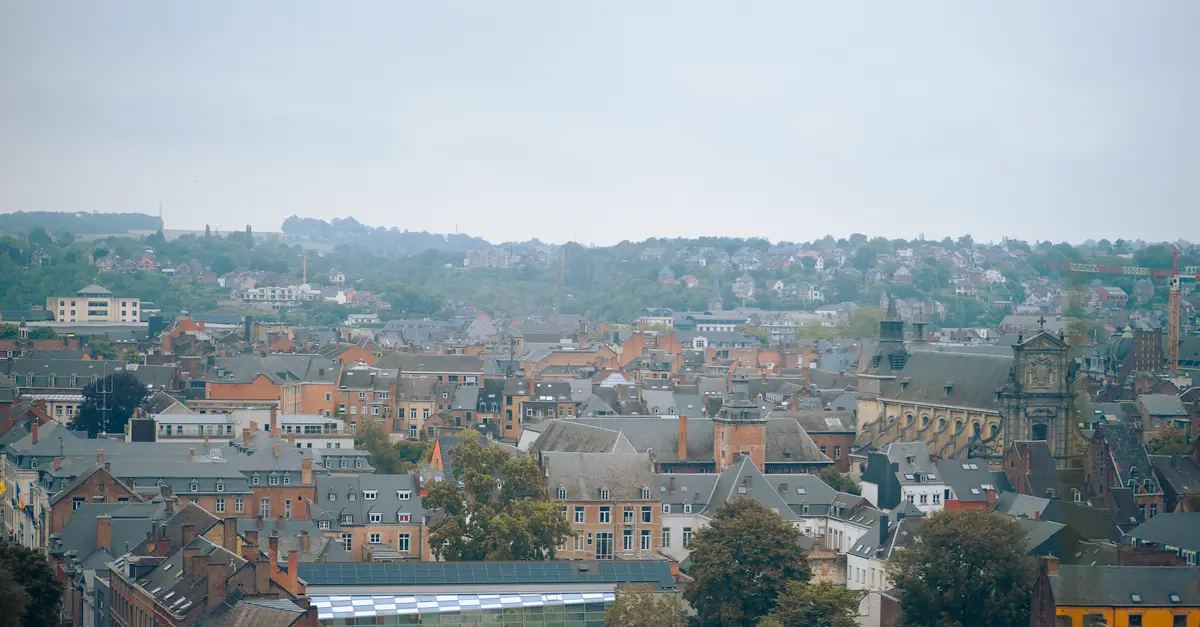
🇧🇪 Belgium at a Glance

Visa Programs
5
Processing Time
2-6 months
Min Income (EUR)
€21,000
Language Requirement
A2 in Dutch, French, or German for citizenship (after 5 years); no language for initial work permit
Path to PR
5 years of legal residence
Path to Citizenship
5 years (with integration requirements) or 10 years (without)
Quality of Life Index
7.8/10
Cost of Living (Single/mo)
€EUR 2,300-EUR 3,500

Visa Programs

ProgramMin Income / PointsMin SavingsLanguageProcessing (Official / Real)Path to PRPath to CitizenshipSource
Single Permit (Combined Work & Residence)Must meet prevailing wage for the sector — minimum wage EUR 1,750/month but most positions require significantly more. Shortage occupation permits may have lower thresholds2-4 months / —
EU Blue CardEUR 58,548/year gross (2026 threshold, indexed annually) — approximately EUR 4,879/month2-3 months / —
Professional Card (Self-Employed)No fixed minimum — must demonstrate economic viability and benefit to Belgium. Typically EUR 25,000+ in startup capital2-4 months / —
Family ReunificationSponsor must earn at least 120% of the social integration income (approximately EUR 1,750/month net). Belgian citizens sponsoring family may face lower thresholds3-6 months / —
Student Visa (Long-Stay Type D)EUR 7,272/year (EUR 606/month) in available funds — adjustable by region and institution. Proof via scholarship, bank statement, or guarantor2-4 months (apply well before academic year start) / —

Financial Requirements

Settlement Funds: Students need EUR 7,272/year in available funds. No formal savings requirement for work permits (income-based). Professional Card applicants typically need EUR 25,000+ startup capital.

Income Thresholds

Single Permit

€21,000 (per year)

Must meet prevailing wage. Belgian minimum wage is EUR 1,750/month. Most skilled positions require significantly more. Shortage occupation sectors may have simplified requirements.

EU Blue Card

€58,548 (per year)

EUR 4,879/month gross. Indexed annually. One of the higher Blue Card thresholds in Europe. Bypasses labor market test.

Family Reunification (Sponsor)

€21,000 (per year)

120% of social integration income. Approximately EUR 1,750/month net. Must be from stable sources (employment, self-employment).

Investment Minimums

Professional Card

€25,000

No fixed legal minimum. EUR 25,000+ typical startup capital expected. Must demonstrate economic benefit to Belgium (job creation, investment, innovation).

Important Notes

Belgium's hidden costs: commune registration (free but requires multiple visits), health insurance mutuality registration (mandatory, EUR 0-100/month depending on status), social security contributions for self-employed (approximately 20.5% of net income quarterly). Belgium has some of Europe's highest personal tax rates (up to 50%). The special expat tax regime (30% expense allowance, max EUR 90,000/year) can significantly reduce effective tax for qualifying foreign workers. Budget EUR 3,000-5,000 for initial relocation and setup costs.

Reality Check

Administrative Complexity — Official says: Belgium has streamlined immigration through the Single Permit system
Reality: Belgium's three-region system creates genuine administrative complexity. Work permits are processed regionally (Flanders/Wallonia/Brussels), residence permits federally (Immigration Office), and visas at embassies. These three entities do not always coordinate efficiently. Processing can stall at any stage. Having an experienced immigration lawyer or employer HR team navigate this is strongly recommended. The commune (municipality) registration after arrival adds another layer — some communes are more efficient than others.
Taxation — Official says: Progressive tax rates up to 50%
Reality: Belgium has among the highest effective tax rates in the OECD for average earners. A gross salary of EUR 50,000 yields approximately EUR 30,000-32,000 net after income tax and social security. However, the special expat tax regime (since January 2022) is a game-changer for qualifying foreign workers: 30% of gross salary treated as tax-free expense allowance (capped at EUR 90,000/year) for up to 5 years. This can save qualifying expats EUR 10,000-25,000/year in taxes. Always ask your employer about this before accepting an offer.
Housing Market — Official says: Belgium has affordable housing compared to neighboring countries
Reality: This is partially true. Brussels, Antwerp, and Ghent are significantly cheaper for rent than Paris, Amsterdam, or London. A 1-bedroom in central Brussels costs EUR 900-1,200/month. However, the rental market has specific challenges: many landlords require a Belgian guarantor, 3-month deposit is standard, and housing quality varies dramatically. Older apartments in Brussels can have poor insulation and high energy costs. Immoweb.be and Zimmo.be are the main listing sites.
Food and Quality of Life — Official says: Belgium has a high quality of life
Reality: Belgium genuinely excels in food culture (chocolate, beer, fries, waffles are just the tourist highlights), healthcare quality, work-life balance, and central European location. Rail connections to Paris (1.5 hours), Amsterdam (2 hours), and London (2 hours) by high-speed train. The downsides: weather is grey and rainy (Brussels averages 200 rain days/year), bureaucracy is complex, and the country's political divisions (Flemish/Francophone) create occasional tensions.

Common Mistakes to Avoid

Insider Tips

Who Qualifies?

Easy
Tech Workers
Best visa: Single Permit (shortage occupation) or EU Blue Card for senior roles
IT is on Belgium's shortage occupation lists across all three regions. Major tech employers include Swift, Euroclear, numerous fintech companies, and a growing startup scene in Brussels and Ghent. Average IT salaries: EUR 3,500-5,400/month. The EU Blue Card (EUR 58,548/year threshold) is accessible for senior developers and tech leads. Brussels' international environment means many IT roles operate in English.
Moderate
Healthcare Workers
Best visa: Single Permit with employer sponsorship
Belgium has healthcare worker shortages, especially for nurses. However, language requirements are strict: Dutch in Flanders, French in Wallonia, both in Brussels. Foreign medical qualifications must be recognized by the relevant community (Flemish, French, or German-speaking). The recognition process takes 3-12 months. Nursing salaries are decent (EUR 2,800-4,000/month) with good working conditions and strong unions.
Moderate
Skilled Trades
Best visa: Single Permit
Construction, electrical, and plumbing trades have shortages. The Brussels Region has specific demand for construction workers due to ongoing urban development. Flanders has construction and manufacturing needs. Language skills (Dutch or French depending on region) are generally required. EU trade qualifications are recognized. Non-EU qualifications may need validation.
Moderate
Remote Workers
Best visa: Professional Card (self-employed) or Single Permit if employer establishes Belgian entity
Belgium has no dedicated digital nomad visa. Remote workers employed by foreign companies face tax and social security complexity. The Professional Card allows self-employed freelancers to live and work in Belgium. Belgium's central location (Paris/Amsterdam/London all within 2 hours by train) and strong internet infrastructure make it attractive for remote professionals. Tax treaty considerations are important for cross-border remote work.
Moderate
Retirees
Best visa: Long-stay visa (Type D) for financial independence
Belgium has no dedicated retiree visa but allows financially independent non-EU/EEA nationals to apply for long-stay residence. You must demonstrate sufficient resources and comprehensive health insurance. Belgium's healthcare system, central location, and moderate cost of living (compared to neighboring countries) make it appealing for retirees. EU/EEA citizens can register freely. Tax treaties may affect pension taxation.
Moderate
Investors
Best visa: Professional Card (if actively managing investment) or Long-stay visa for financial independence
Belgium has no Golden Visa or residence-by-investment programme. Investors who actively manage their investments or businesses can use the Professional Card route. Passive investors may use the financial independence long-stay visa route. Belgium's strategic position as EU capital, strong rule of law, and access to the EU single market make it attractive for business investors. The wealth tax is relatively light compared to France or Norway.

Cost of Living

Brussels
Single (monthly)€2,500
Family (monthly)€4,800
Rent 1BR (center)€1,050
Brussels is affordable by major European capital standards — significantly cheaper than Paris, Amsterdam, or London. Central neighborhoods like Ixelles, Saint-Gilles, and Etterbeek are popular with expats. The EU quarter (Schuman area) is premium. Groceries are reasonable (EUR 250-350/month). Dining out is moderate (EUR 15-25 for a main course). Excellent public transport (STIB/MIVB) at EUR 49/month for a monthly pass.
Antwerp
Single (monthly)€2,200
Family (monthly)€4,200
Rent 1BR (center)€900
Belgium's second-largest city — a major port, diamond capital, and fashion hub. 10-15% cheaper than Brussels. Dutch-speaking (Flemish) environment. Strong cultural scene and excellent food. Good train connections to Brussels (40 minutes). The Zuid (South) district is the trendy area. Growing startup ecosystem. Port-related logistics and trade create diverse employment.
Ghent
Single (monthly)€2,000
Family (monthly)€3,800
Rent 1BR (center)€800
University city with a vibrant cultural scene — often rated Belgium's most liveable city. 15-20% cheaper than Brussels. Dutch-speaking but with a cosmopolitan atmosphere due to Ghent University. Excellent cycling infrastructure. Strong biotech and tech sectors. Historic city center. Good train connections to Brussels (30 minutes). Growing international community.

Salary Data (Annual, EUR)

ProfessionJunior (Gross / Net)Mid (Gross / Net)Senior (Gross / Net)
Software Engineer€— / €—€— / €—€— / €—
Nurse€— / €—€— / €—€— / €—
Teacher€— / €—€— / €—€— / €—
Marketing Manager€— / €—€— / €—€— / €—
Graphic Designer€— / €—€— / €—€— / €—
Mechanical Engineer€— / €—€— / €—€— / €—
Accountant€— / €—€— / €—€— / €—
Data Analyst€— / €—€— / €—€— / €—
Architect€— / €—€— / €—€— / €—
Chef€— / €—€— / €—€— / €—

Monthly figures in EUR. Net reflects Belgian progressive income tax (25-50%) and employee social security contributions (13.07%). Brussels salaries tend to be 5-10% higher than national averages. Meal vouchers and other non-taxable benefits are common but not included.

Downloadable Data

Frequently Asked Questions

How does Belgium's three-region system affect immigration?

Belgium has three regions (Flanders, Wallonia, Brussels-Capital) with different work permit policies. Your work permit application is processed by the region where you work. Requirements and labor market tests vary by region. The federal government handles residence permits. This dual system can create complexity and longer processing times.

What is Belgium's Single Permit?

The Single Permit (since 2019) combines work and residence authorization in one application. Your employer applies to the regional economic migration service. Processing takes 2-4 months. It is employer-specific and valid for up to 1 year, renewable. After 5 years of legal residence, you can apply for permanent residency.

What is the EU Blue Card in Belgium?

The Blue Card is for highly qualified workers with a university degree and minimum gross salary of EUR 58,548/year. It offers faster processing than the Single Permit, bypasses labor market tests, and allows EU mobility after 12 months. It is one of the higher Blue Card thresholds in Europe.

How does Belgian taxation work?

Belgium has progressive income tax: 25% (first EUR 15,200), 40% (EUR 15,200-26,830), 45% (EUR 26,830-46,440), and 50% (above EUR 46,440). Social security is 13.07%. A special expat tax regime allows 30% of salary as tax-free expense allowance (max EUR 90,000/year) for 5 years for qualifying foreign workers.

What is Belgium's Professional Card for self-employed workers?

The Professional Card allows non-EU/EEA self-employed professionals and entrepreneurs to work in Belgium. It requires a business plan demonstrating economic benefit, proof of qualifications, and sufficient startup capital. Valid for up to 5 years. Self-employed social contributions are approximately 20.5% of net income.

How good is Belgium's healthcare system?

Belgium has excellent healthcare. All residents must register with a mutuality (health insurance fund). The system reimburses approximately 75% of costs. GP visits cost EUR 10-15 after reimbursement. Specialist wait times are short (1-2 weeks). Prescription medications are heavily subsidized. Belgium has a high doctor-to-patient ratio.

What is the path to Belgian citizenship?

Citizenship requires 5 years of legal residence plus proof of economic integration, social integration (A2 language in Dutch, French, or German), and community participation. Alternatively, 10 years without integration proof. Belgium allows dual citizenship. Processing takes 3-5 months after submission.

How important is language in Belgium?

Language is central to Belgian life. Flanders requires Dutch, Wallonia requires French, Brussels is bilingual. English works in international organizations and EU institutions in Brussels. Career advancement requires the local language. Integration courses with language instruction are available in all regions.

Find out if you qualify for Belgium

Our free assessment matches your profile against Belgium's 5 visa programs in under 2 minutes.

Get My Solutions